You are not logged in.
#1531 30-03-2026 10:53:32
- HFM
- Member

- Registered: 26-06-2014
- Posts: 2041
Re: hotforex.com - Market analysis and news.
Date: 30th March 2026.
Markets on Edge: Oil, Geopolitics, and Key Data to Drive the Week Ahead.
Trading Leveraged products is Risky
A Nervous Start for Global Markets
Markets didn?t ease into the week, they stepped into it cautiously.
Across Europe and Asia, stocks opened under pressure, extending last week?s losses as investors continue to digest the growing uncertainty surrounding the Middle East. What started as a contained geopolitical event is now being treated as something far more serious, and that shift in perception is clearly visible in price action.
After holding up surprisingly well in recent weeks, equities are beginning to crack. Major indices like the S&P 500 and Nasdaq 100 have slipped into correction territory, reflecting a broader change in sentiment. The mood has shifted from ?buy the dip? to something more defensive, protect capital first, then think about returns.
At the center of it all is the ongoing Iran conflict, which remains the dominant driver of market direction.
Oil Is the Market?s Pressure Point
If there?s one market telling the story most clearly right now, it?s oil.
Prices have surged sharply, with Brent crude pushing above $110 per barrel. That?s not just a headline number, it?s a signal that traders are starting to price in real supply risks rather than just speculation.
A major concern is the Strait of Hormuz, one of the world?s most important oil routes. Any disruption there wouldn?t just move oil prices, it would ripple across the global economy, pushing inflation higher and putting pressure on growth.
There?s also growing unease around potential escalation, including threats to key infrastructure and the possibility of a wider regional involvement. And that?s where things become more complex for markets, because it?s no longer just about oil, it?s about how long this situation could last.
For traders, this environment means one thing: volatility isn?t going anywhere.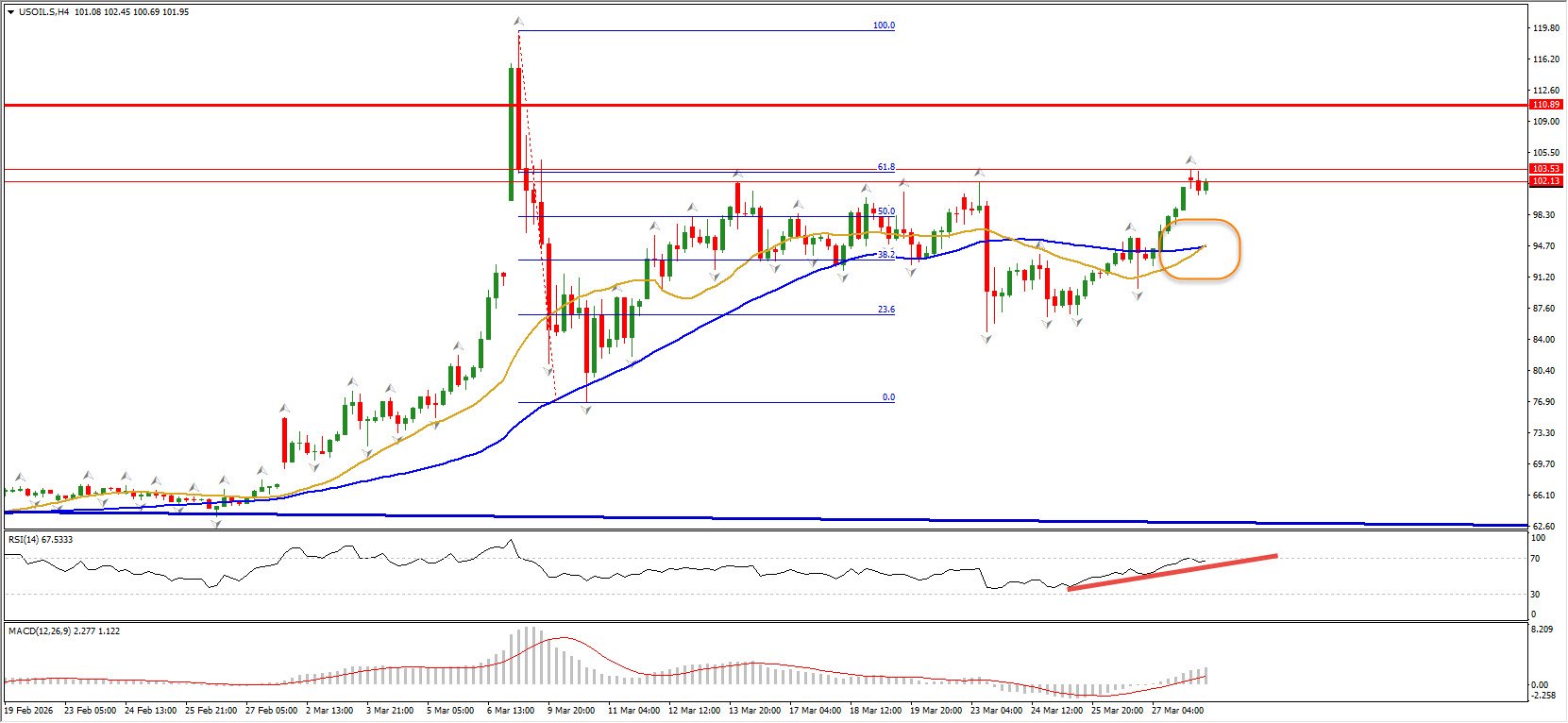
Stocks Are Feeling the Pressure
Equity markets are starting to reflect that reality.
Last week marked the fifth consecutive weekly decline for US stocks, something we haven?t seen in years. It?s not panic, but it?s definitely discomfort.
Rising energy costs are squeezing margins, growth concerns are creeping back in, and central bank uncertainty isn?t helping. Tech stocks have taken the biggest hit, dragging the Nasdaq lower, while more traditional sectors have held up slightly better.
At the same time, money is quietly rotating. Bonds are attracting buyers again, gold is stabilising, and the Japanese yen is gaining strength. These aren?t aggressive moves,but they?re telling. Investors are starting to lean towards safety.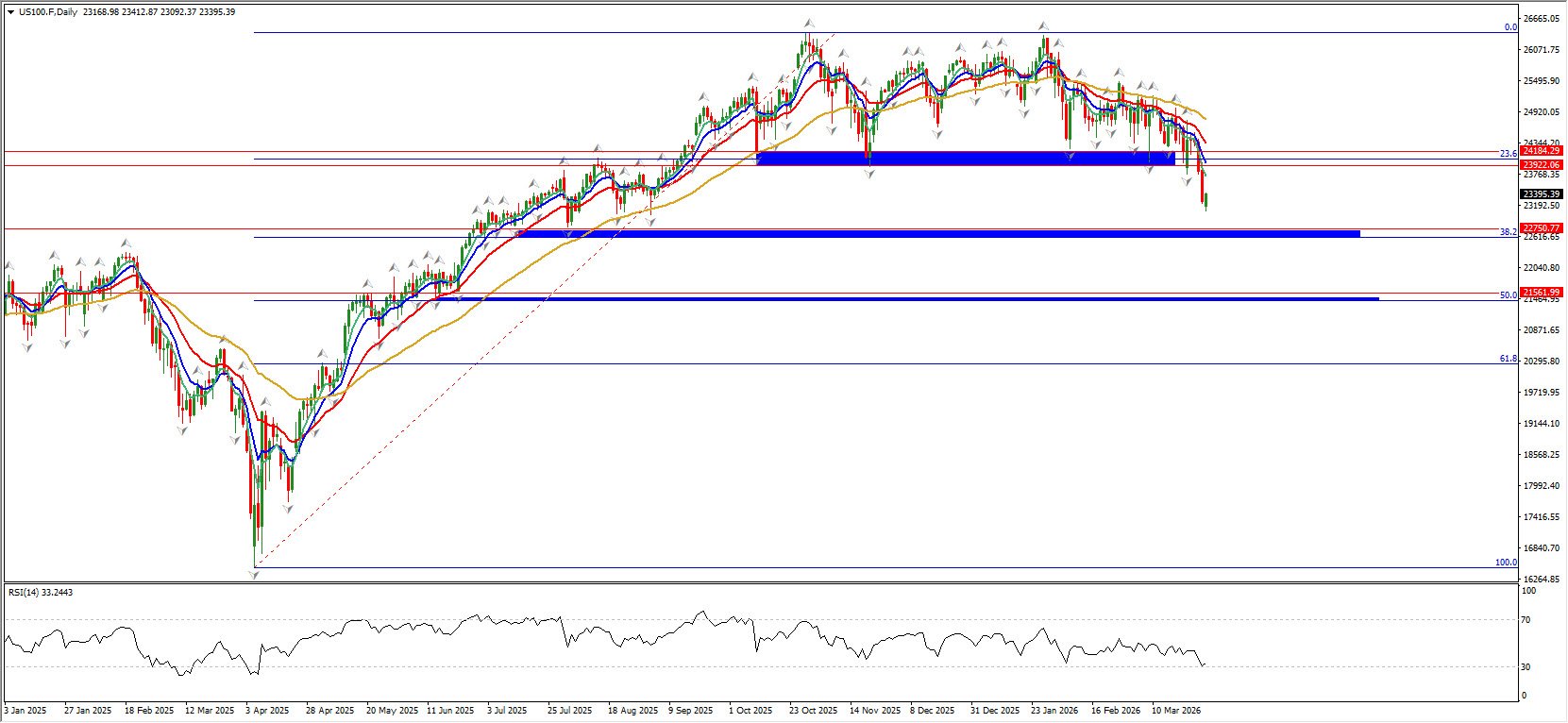
The Fed Is Back in the Spotlight
While geopolitics is dominating headlines, macro data is just as important this week, especially when it comes to the US labour market.
Recent figures showed that employers cut 92,000 jobs in February, which raised a few eyebrows. It?s not a collapse, but it?s enough to spark questions about whether the labor market is starting to lose momentum.
That makes this week?s data particularly important. The Federal Reserve is watching closely, and so is the market.
After cutting rates late last year, the Fed has paused due to stubborn inflation. Now, they?re stuck in a difficult position. If the labor market weakens further, pressure to cut again will build. But if inflation stays high, they may have no choice but to hold rates where they are.
For traders, this creates a tricky dynamic. Good news and bad news can both move markets, it just depends on how they shift expectations around interest rates.
Are Consumers Starting to Pull Back?
Another key piece of the puzzle is the consumer.
Spending has shown signs of slowing at the start of the year, although part of that has been blamed on temporary factors like poor weather. Still, this week?s retail sales data will be important in confirming whether that slowdown is fading, or sticking.
Consumer confidence will also be in focus, especially as geopolitical tensions and rising oil prices start to filter into everyday sentiment. If households begin to feel less secure, that can quickly translate into weaker spending.
And since consumer activity drives a large part of the US economy, any shift here matters, not just for growth, but for markets as well.
Earnings in Focus: A Look at the Real Economy
This week also brings a fresh batch of corporate earnings, offering a more grounded view of how businesses are navigating the current environment.
Nike is one of the most closely watched names. The company has been under pressure, but there?s a growing sense among some analysts that it may be nearing a turning point. Whether that optimism is justified will become clearer once the numbers are out.
At the same time, Conagra Brands and other food producers will give us insight into something even more important, how consumers are behaving when it comes to everyday spending. Updates from McCormick & Company, Lamb Weston, and Cal-Maine Foods will help paint that picture.
These are the kinds of companies that don?t just reflect the economy, they live it. And right now, their signals matter.
Quiet Strength in Bonds
While stocks have struggled, bonds are starting to find some footing again.
Yields have edged lower as investors look for safer places to park capital. It?s not a dramatic move, but it does suggest that expectations are shifting slightly, towards slower growth and possibly more supportive central bank policy down the line.
Some larger players are already positioning for that scenario, anticipating that if the economic outlook weakens further, bonds could outperform.
What Traders Should Watch This Week
* Developments in the Iran conflict and any signs of escalation
* Oil price movements and their broader impact on inflation
* US labour market data, especially the Non-Farm Payrolls report
* Consumer strength through retail sales and confidence figures
* Corporate earnings, particularly in consumer-focused sectors
Final Thoughts: A Market Driven by Headlines and Data
This is one of those weeks where everything matters.
Geopolitical headlines can move markets in seconds, while economic data can reshape expectations just as quickly. It?s a challenging environment, but also one full of opportunity for those who stay disciplined.
For newer traders, this is a reminder that risk management isn?t optional, it?s essential. For more experienced participants, it?s a time to stay flexible and avoid becoming too attached to a single narrative.
Because right now, the market is doing what it does best, adapting in real time.
Always trade with strict risk management. Your capital is the single most important aspect of your trading business.
Please note that times displayed based on local time zone and are from time of writing this report.
Click HERE to access the full HFM Economic calendar.
Want to learn to trade and analyse the markets? Join our webinars and get analysis and trading ideas combined with better understanding of how markets work. Click HERE to register for FREE!
Click HERE to READ more Market news.
Andria Pichidi
HFMarkets
Disclaimer: This material is provided as a general marketing communication for information purposes only and does not constitute an independent investment research. Nothing in this communication contains, or should be considered as containing, an investment advice or an investment recommendation or a solicitation for the purpose of buying or selling of any financial instrument. All information provided is gathered from reputable sources and any information containing an indication of past performance is not a guarantee or reliable indicator of future performance. Users acknowledge that any investment in Leveraged Products is characterized by a certain degree of uncertainty and that any investment of this nature involves a high level of risk for which the users are solely responsible and liable. We assume no liability for any loss arising from any investment made based on the information provided in this communication. This communication must not be reproduced or further distributed without our prior written permission.
Offline
#1532 31-03-2026 10:43:06
- HFM
- Member
- Registered: 26-06-2014
- Posts: 2041
Re: hotforex.com - Market analysis and news.
Date: 31st March 2026.
Oil Volatility, Gold Rally, and Geopolitical Risks Dominate Sentiment.
Trading Leveraged products is Risky
Global financial markets remain highly sensitive to geopolitical headlines as escalating tensions in the Middle East continue to disrupt energy flows and shape investor sentiment. From surging oil prices to shifting expectations around interest rates, today?s market environment is being driven by a complex mix of supply shocks, central bank signals, and risk appetite fluctuations.
Oil Prices Surge Amid Supply Disruptions
Crude oil markets remain at the center of attention, with Brent Crude Oil climbing above $115 per barrel before stabilizing near $113. The move comes as escalating conflict between the US, Israel, and Iran threatens critical supply routes.
The Strait of Hormuz, a vital artery for global oil transportation, is operating at severely reduced capacity. Estimates suggest that:
* Around 100 million barrels per week are currently unable to pass through the strait
* Monthly disruptions could reach 400 million barrels
If these constraints persist for the next 6?8 weeks, analysts warn oil could spike toward $150?$200 per barrel, driven by the physical imbalance between supply and demand rather than political rhetoric.
Recent developments, including drone strikes on oil tankers near Dubai and continued missile activity across the Gulf region, underscore the fragility of energy infrastructure and the growing risk premium embedded in oil prices.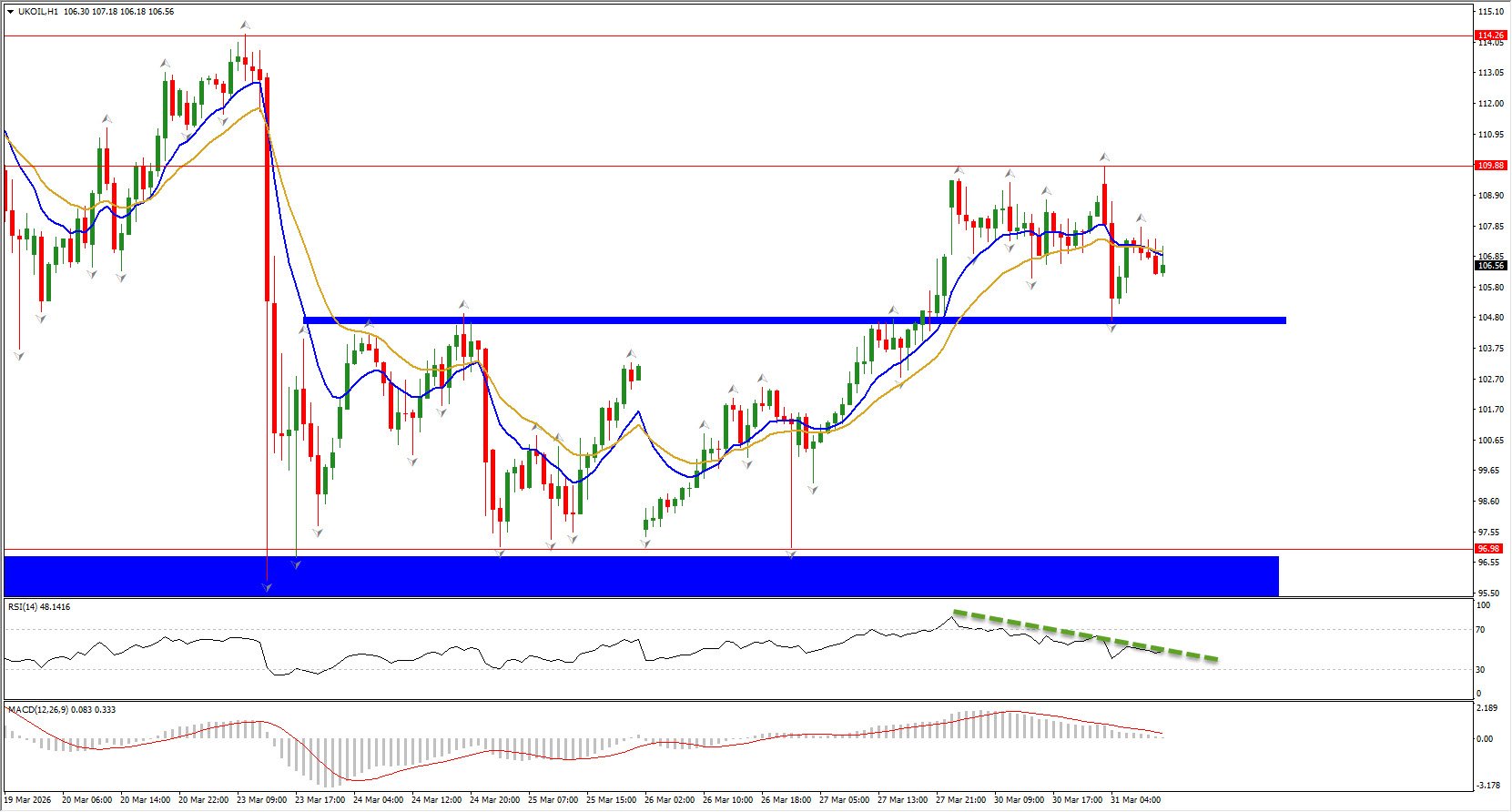
Gold Gains on Fed Signals and Safe-Haven Demand
At the same time, Gold has extended its upward momentum, briefly jumping over 2% before stabilizing near $4,560 per ounce.
The rally is being supported by two key factors:
1. Federal Reserve Signals
Comments from Jerome Powell suggested that interest rates are currently in a ?wait-and-see? phase, easing fears of aggressive tightening despite rising oil-driven inflation.
* Treasury yields declined
* Rate hike expectations softened
* The opportunity cost of holding gold decreased
2. Geopolitical Uncertainty
Safe-haven demand remains strong as investors react to:
* Ongoing conflict in the Middle East
* Uncertainty over US military strategy
* Risks of further escalation impacting global trade routes
However, despite the recent bounce, gold still faces structural pressure as markets are not fully pricing in an economic slowdown, limiting the upside unless recession risks intensify.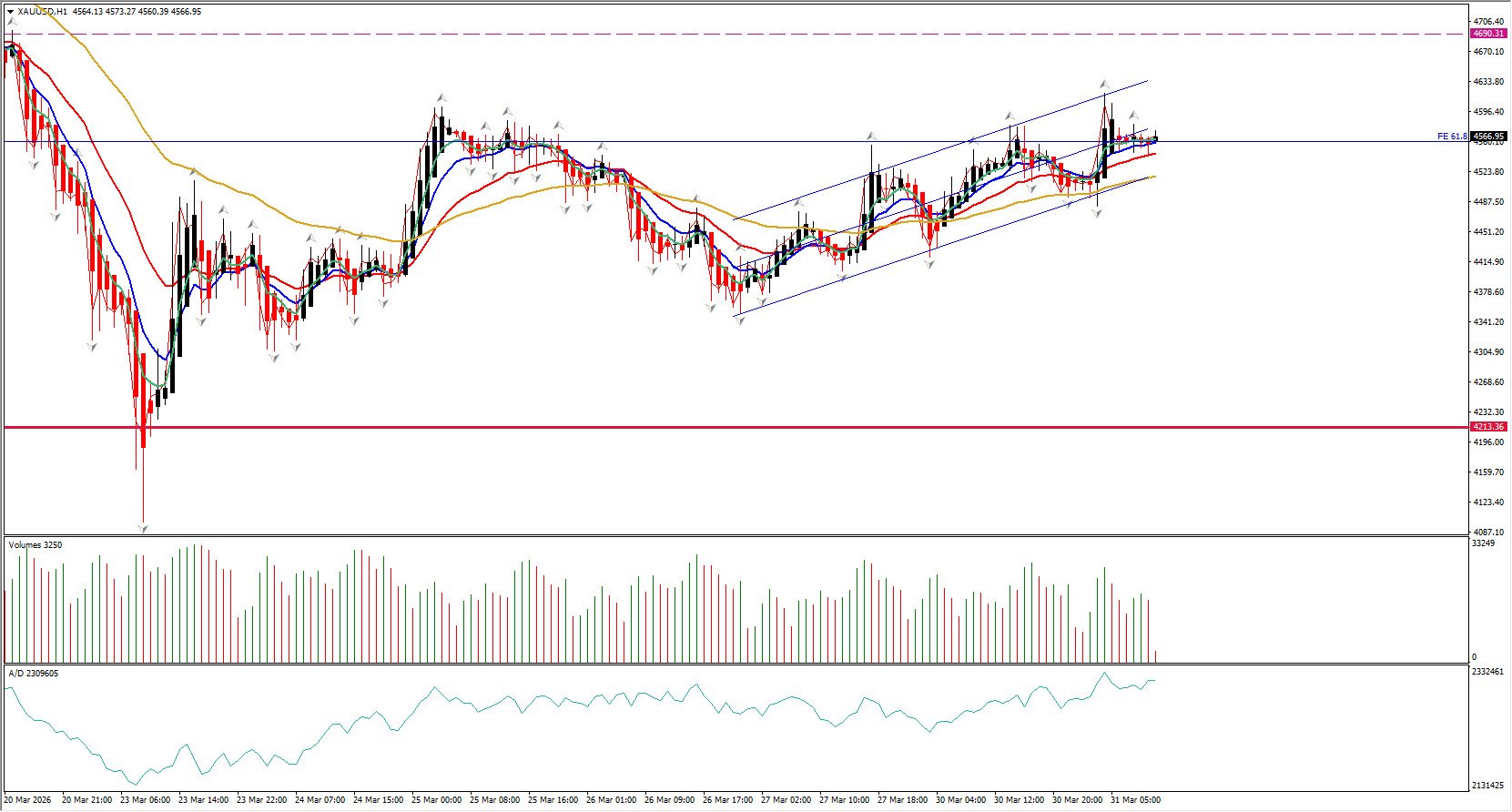
Equity Markets Show Mixed Performance
Equity markets are struggling to find direction amid conflicting signals:
* US futures edged higher, reflecting cautious optimism
* European stocks opened flat as investors digest geopolitical developments
* Asian markets declined sharply, led by losses in South Korea
The divergence highlights the current environment where headline-driven trading dominates, with investors reacting quickly to geopolitical updates rather than macroeconomic fundamentals.
Political Developments Add Complexity
Recent statements from Donald Trump indicate a potential willingness to end the conflict with Iran, even if the Strait of Hormuz remains partially closed. This suggests possible de-escalation scenarios, though risks remain elevated.
Meanwhile, Benjamin Netanyahu stated that military operations are ?beyond the halfway point? in terms of objectives, but without a defined timeline, reinforcing uncertainty around the duration of the conflict. At the same time, threats of further strikes on Iranian infrastructure, including oil and desalination facilities, continue to keep markets on edge.
Key Takeaways for Traders
* Oil remains fundamentally driven: Supply disruptions, not political commentary, are dictating price direction
* Gold is balancing forces: Supported by lower yields and risk aversion, but capped by stable economic expectations
* Markets are headline-sensitive: Short-term volatility will likely persist as geopolitical developments unfold
* Risk management is critical: Rapid shifts in sentiment can trigger sharp moves across commodities, currencies, and equities
Market Outlook
Looking ahead, traders should closely monitor:
* Developments around the Strait of Hormuz and global oil flows
* Any concrete progress in US-Iran negotiations
* Central bank communication, particularly from the Federal Reserve
* Broader risk sentiment across equity and bond markets
The current environment reinforces a key principle: markets are being driven less by forecasts and more by real-time geopolitical developments and physical supply constraints.
Always trade with strict risk management. Your capital is the single most important aspect of your trading business.
Please note that times displayed based on local time zone and are from time of writing this report.
Click HERE to access the full HFM Economic calendar.
Want to learn to trade and analyse the markets? Join our webinars and get analysis and trading ideas combined with better understanding of how markets work. Click HERE to register for FREE!
Click HERE to READ more Market news.
Andria Pichidi
HFMarkets
Disclaimer: This material is provided as a general marketing communication for information purposes only and does not constitute an independent investment research. Nothing in this communication contains, or should be considered as containing, an investment advice or an investment recommendation or a solicitation for the purpose of buying or selling of any financial instrument. All information provided is gathered from reputable sources and any information containing an indication of past performance is not a guarantee or reliable indicator of future performance. Users acknowledge that any investment in Leveraged Products is characterized by a certain degree of uncertainty and that any investment of this nature involves a high level of risk for which the users are solely responsible and liable. We assume no liability for any loss arising from any investment made based on the information provided in this communication. This communication must not be reproduced or further distributed without our prior written permission.
Offline
#1533 01-04-2026 09:56:51
- HFM
- Member
- Registered: 26-06-2014
- Posts: 2041
Re: hotforex.com - Market analysis and news.
Date: 1st April 2026.
What Will Determine If Gold Rebounds?
Trading Leveraged products is Risky
On the last day of the month, Gold witnesses its strongest gains within the month of March. The commodity rose in value by 3.45% and also continues to rise further during this morning?s Asian session. If the price of Gold continues to rise today, the asset will complete its fourth day of consecutive increases.
The reason for Gold?s bullish price movement is largely due to three factors. The Israeli Prime Minister on Tuesday, told journalists that half of the country?s aims have been achieved, meaning that the conflict could last for some time. This is driving the price of Gold higher. However, another key development triggering demand for Gold is bond yields and interest rates.
How Are Interest Rates & Bonds Supporting A Gold Rebound?
One reason investors preferred the US Dollar over Gold as a safe-haven asset was bonds. Rising bond yields made the Dollar more attractive, especially as investors viewed gold as extremely expensive. Yields climbed to their highest level in eight months. However, bond yields have fallen for four consecutive days and, at the same time analysts are expecting inflation to increase.
With bond yields falling and inflation increasing, the market is likely to witness a negative real bond yield. As a result, the US Dollar becomes less attractive as a hedge against inflation and investors turn to Gold. Gold has been used as a hedge against inflation on multiple occasions since the 1970s and most recently during the 2022 inflation crisis.
The US inflation data, due on April 10th, will be key for gold. It may confirm whether bond yields will turn negative. Currently, analysts expect inflation to rise from 2.4% to 4.0%. However, some Wall Street reports suggest it could reach 4.2%.
Nevertheless, a word of caution for market participants. Market volatility and trends will also largely depend on the Federal Reserve. Generally, higher inflation is traditionally known to support Gold, however, if the Federal Reserve is quick to react and become significantly hawkish, the Dollar becomes more attractive and bond yields will rise. As a result, Gold may come under pressure.
Gold - Technical Analysis[/B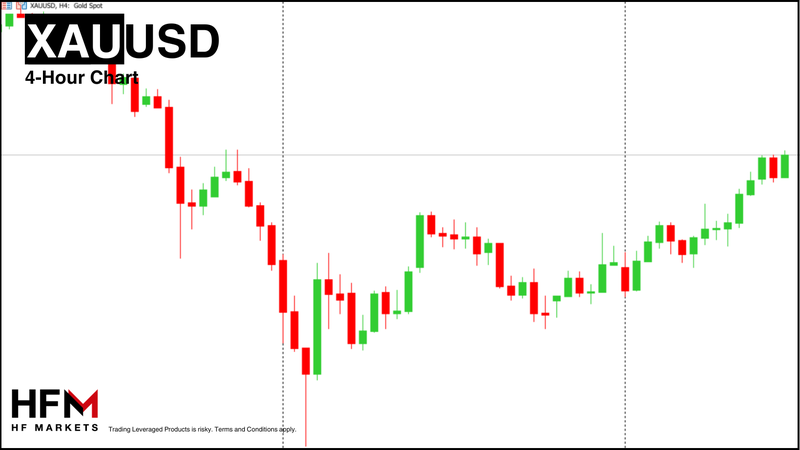
HFM - XAUUSD 4-Hour Chart
Gold prices had fallen 22% throughout the crisis, and the rebound of the past few days measured a 50% correction. For this reason, based on price action theories, the asset is still at risk of this price movement being a strong retracement before declining again. However, this will fade if the price rises to $4,800, indicating a potential bullish trend in the long term.
In the short term, the price of Gold is trading above the most important moving averages and above the day?s VWAP. The asset is also forming clear higher highs and lows while the US Dollar is the day?s worst-performing currency. For this reason, momentum analysis is pointing towards Gold continuing to rise in value.
[b]The US Dollar
A key element for Gold will be the US Dollar, real bond yields and the Federal Reserve?s reaction. However, for the US Dollar in the short term investors will be monitoring today?s ADP NFP Change, Retail Sales figure and ISM Purchasing Managers? Index.
If these figures come in above expectations, the US Dollar could rise in value. This is because the Fed may feel more confident about raising interest rates in the short term to tackle inflation. Economists are advising that the possibility of the Federal Reserve slightly raising rates is feasible, but is only likely to be possible for a short period.
Investors remain focused on the latest remarks from Fed Chair Jerome Powell. Speaking at Harvard University, Powell said inflation expectations remain stable despite rising energy prices. As a result, the Fed does not currently plan to adjust borrowing costs, as he believes interest rate changes affect the economy with a delay. In his view, tightening monetary policy now would do little to offset the inflationary effects of the US-Iran confrontation.
However, some experts believe Powell?s optimism may be overstated, particularly as he is expected to step down in May. Over the past month, US gasoline prices have climbed 30% to $4.0 per gallon, while diesel has risen 40.0% to $5.0 per gallon, marking the highest levels seen since the start of the Russia-Ukraine conflict in 2022.
Nonetheless, key releases this week for the US Dollar will be today?s three releases as well as Friday?s NFP employment data.
Key Takeaways:
* Gold surged 3.45% at month-end and is on track for a fourth consecutive day of gains.
* Falling bond yields and rising inflation expectations are driving demand, increasing the likelihood of negative real yields.
* The April 10 US CPI release is critical, with forecasts pointing to a sharp rise towards 4.0%-4.2%.
* Despite bullish momentum, a more hawkish Federal Reserve could strengthen the US Dollar and pressure gold prices.
Always trade with strict risk management. Your capital is the single most important aspect of your trading business.
Please note that times displayed based on local time zone and are from time of writing this report.
Click HERE to access the full HFM Economic calendar.
Want to learn to trade and analyse the markets? Join our webinars and get analysis and trading ideas combined with better understanding of how markets work. Click HERE to register for FREE!
Click HERE to READ more Market news.
Andria Pichidi
HFMarkets
Disclaimer: This material is provided as a general marketing communication for information purposes only and does not constitute an independent investment research. Nothing in this communication contains, or should be considered as containing, an investment advice or an investment recommendation or a solicitation for the purpose of buying or selling of any financial instrument. All information provided is gathered from reputable sources and any information containing an indication of past performance is not a guarantee or reliable indicator of future performance. Users acknowledge that any investment in Leveraged Products is characterized by a certain degree of uncertainty and that any investment of this nature involves a high level of risk for which the users are solely responsible and liable. We assume no liability for any loss arising from any investment made based on the information provided in this communication. This communication must not be reproduced or further distributed without our prior written permission.
Offline
#1534 02-04-2026 09:53:48
- HFM
- Member
- Registered: 26-06-2014
- Posts: 2041
Re: hotforex.com - Market analysis and news.
Date: 2nd April 2026.
Stock Market Today: Futures Fall as Iran Tensions Lift Oil Above $100.
Trading Leveraged products is Risky
Global markets turned cautious on Thursday, with US equity futures moving lower as uncertainty surrounding the ongoing conflict between the US and Iran persists. Comments from Donald Trump indicated that military operations are not yet complete, reducing expectations for a near-term resolution and keeping investors on the defensive.
At the time of writing, S&P 500 futures are down approximately 1.3%, while Nasdaq 100 futures are underperforming with losses near 1.6%. Dow Jones futures are also trading lower, reflecting a broader pullback in risk appetite as the week draws to a close.
Energy Markets Remain the Key Driver
Oil continues to play a central role in shaping market direction. Both Brent Crude Oil and West Texas Intermediate have moved back above the $100 level, reversing earlier declines as supply concerns resurface.
Since the escalation of the conflict in late February, oil prices have risen significantly, with volatility driven largely by uncertainty around supply routes. In particular, the Strait of Hormuz remains a critical focal point for traders, given its importance in global energy transportation. Any disruption or confirmation of reopening, could lead to sharp price reactions across energy markets and beyond.
From Oil Shock to Energy Shock
The current environment is increasingly being viewed as a broader energy shock rather than a traditional oil-driven event, according to Bank of America. This reflects the evolving structure of the global economy, which is now more sensitive to disruptions across the wider energy complex.
Rather than focusing solely on crude, markets are reacting to pressures across natural gas, supply chains, and industrial inputs. This has important implications for inflation and growth expectations, which are now moving in opposite directions.
* US growth is projected to slow to 2.3% in 2026
* Inflation is expected to rise to 3.6%
* Global growth forecasts have been revised lower
* Inflation projections have been revised higher
This combination points to a mild stagflationary backdrop, which typically creates a more challenging environment for equities and risk assets.
Global Market Reaction: Signs of Rotation
Equity markets are beginning to show early signs of rotation, particularly within the technology sector. High-growth names, including AI leaders such as Nvidia, are losing momentum after an extended period of strong performance.
This shift is largely driven by macro factors. As inflation expectations remain elevated, bond yields tend to stay higher, which in turn puts pressure on growth valuations. As a result, investors are gradually adjusting their positioning, with some rotation towards more defensive sectors becoming evident.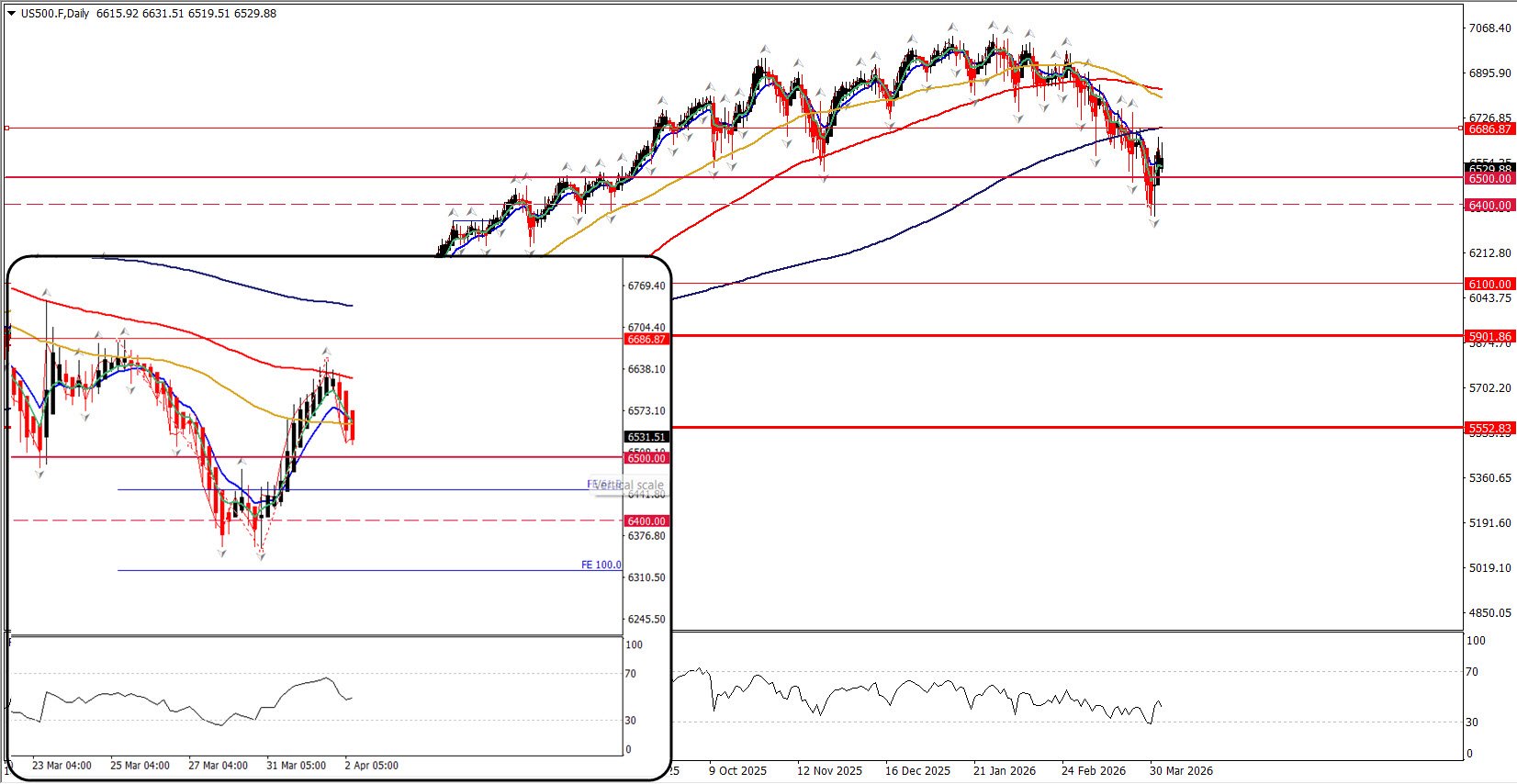
While this does not necessarily signal a long-term trend reversal, it highlights a change in short-term market leadership that traders should monitor closely.
The more cautious tone is reflected across global markets. Asian equities have moved lower, with some indices posting notable declines following the latest geopolitical developments. At the same time, energy prices have resumed their upward trajectory, while European natural gas prices have also edged higher.
Interestingly, gold prices have declined despite ongoing geopolitical tensions. This suggests that recent moves may be driven more by positioning adjustments and profit-taking rather than a traditional flight to safety.
Key Events Ahead
With markets heading into the Good Friday closure, focus now shifts to upcoming US economic data, which could provide further direction.
Key releases to monitor include:
* Weekly jobless claims
* The Non-Farm Payrolls (NFP) report
These indicators will be closely watched for signals on the strength of the labour market and the broader economic outlook, particularly in the context of rising energy prices.
Conclusion
Markets remain highly sensitive to geopolitical developments, with energy prices acting as the primary transmission channel into broader asset classes. The lack of clarity around the Iran conflict continues to limit risk appetite and reinforce a more cautious trading environment.
In the near term, traders should expect:
* Continued headline-driven volatility
* Strong correlation between oil and equity markets
* Ongoing pressure on risk sentiment if tensions persist
Maintaining flexibility and disciplined risk management remains essential as markets navigate this complex backdrop.
Always trade with strict risk management. Your capital is the single most important aspect of your trading business.
Please note that times displayed based on local time zone and are from time of writing this report.
Click HERE to access the full HFM Economic calendar.
Want to learn to trade and analyse the markets? Join our webinars and get analysis and trading ideas combined with better understanding of how markets work. Click HERE to register for FREE!
Click HERE to READ more Market news.
Andria Pichidi
HFMarkets
Disclaimer: This material is provided as a general marketing communication for information purposes only and does not constitute an independent investment research. Nothing in this communication contains, or should be considered as containing, an investment advice or an investment recommendation or a solicitation for the purpose of buying or selling of any financial instrument. All information provided is gathered from reputable sources and any information containing an indication of past performance is not a guarantee or reliable indicator of future performance. Users acknowledge that any investment in Leveraged Products is characterized by a certain degree of uncertainty and that any investment of this nature involves a high level of risk for which the users are solely responsible and liable. We assume no liability for any loss arising from any investment made based on the information provided in this communication. This communication must not be reproduced or further distributed without our prior written permission.
Offline
#1535 06-04-2026 10:21:24
- HFM
- Member
- Registered: 26-06-2014
- Posts: 2041
Re: hotforex.com - Market analysis and news.
Date: 6th April 2026.
15 Ships Cross the Strait As Iran Consider Ceasefire.
Trading Leveraged products is Risky
Crude Oil reached its highest price throughout March at $119 per barrel, but it was relatively quick to fall closer to $100. However, Iran continues to target neighbouring countries' oil production facilities. As a result, Oil has been rising for two consecutive weeks and is now trading at almost $112 per barrel.
Over the weekend, Iran increased its attacks, particularly on Abu Dhabi and Kuwait triggering strong volatility. Abu Dhabi authorities said operations at the Borouge plant were suspended after debris from an interception hit the facility. Kuwait said Iranian drone attacks damaged two power plants and sparked fires at oil facilities.
Most countries observe Monday the 6 as a bank holiday for Easter, so some markets are closed and others see lighter order flow.
Crude Oil - Iraqi Ships Allowed To Cross Strait Of Hormuz
There are many factors pushing the price of Oil upwards including Trump?s escalating comments and the recent Iran attacks. In addition to this, OPEC?s recent report on the forward guidance of the market conditions also worries investors. According to OPEC, the region will not be able to return to full capacity after the conflict ends for over two years.
As a result, the market is likely to face tighter global supply conditions, with Russian exports remaining constrained by ongoing sanctions and Middle Eastern production also under pressure due to the recent disruptions. This combination could reduce the amount of available supply in the market and keep upward pressure on prices.
The market is attempting to reduce the stress on the supply issues within the oil sector. OPEC has made a statement publicly confirming that certain countries will boost the production levels above previous restriction. Iraq told Asian traders and refiners to continue crude loadings after Iran allowed its oil tankers to pass through the Strait of Hormuz.
Iran has confirmed that 15 ships moved through the Strait over the weekend after being granted access. However, it is unknown whether these are linked to Iraq. Japan is advising that two of these 15 ships are Japanese.
Saudi Arabia has increased the official selling price of its main crude grade for Asian buyers to a record-high premium. The move also suggests that buyers may be willing to pay more to secure reliable cargoes amid ongoing concerns over global energy flows and Middle East production risks.
Investors say oil is unlikely to rise above $120 per barrel if the conflict ends within two weeks. Experts believe sanctions on Russia may ease if the conflict comes to an end. They also expect supply chains to restart, although likely at lower capacity levels. However, if the conflict lasts longer, experts believe crude oil could rise to $145 per barrel.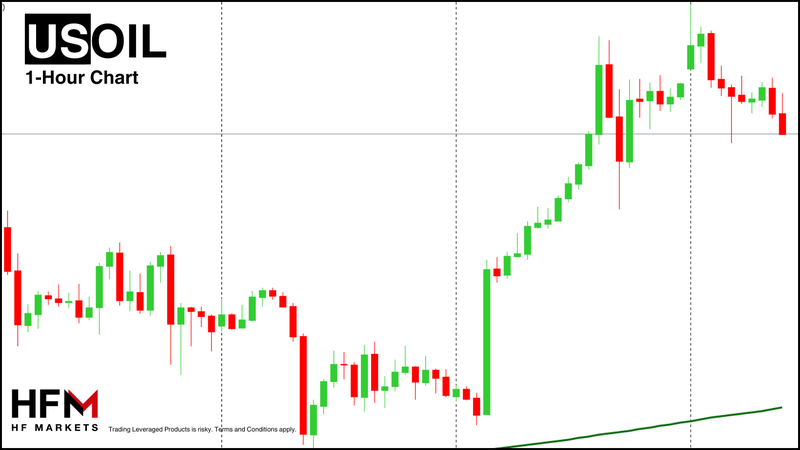
HFM - Crude Oil 1-Hour Chart
A key development for Crude Oil will be a possible 45-day ceasefire, which is currently being discussed.
NASDAQ - Employment Data Boosts Investor Sentiment
The stock market is trading relatively well in comparison to the previous week due to a possible 45-day ceasefire and the latest US employment data.
Steve Witkoff and Jared Kushner are currently believed to be in Pakistan negotiating a 45-day ceasefire with Iran. According to reports, a ceasefire is possible, but some sticking points remain as Iran refuses to agree on certain key points. Overnight, President Trump said on his live network that if Iran does not agree to the deal, the US will attack the country's power plants.
A deal or lack of one in the upcoming days is likely to create a lot of volatility for the NASDAQ and global stocks. In addition to this, the latest employment data did not create volatility on Friday due to limited trading but is supporting the index this morning. The Non-Farm Employment Change rose by 178,000, more than double the previous projections. The US Unemployment Rate also fell from 4.4% to 4.3%.
Key Takeaways:
* Oil rises for a second week, nearing $112, as Iran attacks energy infrastructure in Abu Dhabi and Kuwait.
* Supply risks grow as OPEC warns capacity recovery may take over two years post-conflict.
* Partial relief is seen as Iraq shipments resume via the Strait of Hormuz, but overall supply remains constrained.
* Oil outlook depends on conflict duration: ~$120 if short-term, up to $145 if prolonged.
Always trade with strict risk management. Your capital is the single most important aspect of your trading business.
Please note that times displayed based on local time zone and are from time of writing this report.
Click HERE to access the full HFM Economic calendar.
Want to learn to trade and analyse the markets? Join our webinars and get analysis and trading ideas combined with better understanding of how markets work. Click HERE to register for FREE!
Click HERE to READ more Market news.
Michalis Efthymiou
HFMarkets
Disclaimer: This material is provided as a general marketing communication for information purposes only and does not constitute an independent investment research. Nothing in this communication contains, or should be considered as containing, an investment advice or an investment recommendation or a solicitation for the purpose of buying or selling of any financial instrument. All information provided is gathered from reputable sources and any information containing an indication of past performance is not a guarantee or reliable indicator of future performance. Users acknowledge that any investment in Leveraged Products is characterized by a certain degree of uncertainty and that any investment of this nature involves a high level of risk for which the users are solely responsible and liable. We assume no liability for any loss arising from any investment made based on the information provided in this communication. This communication must not be reproduced or further distributed without our prior written permission.
Offline
#1536 07-04-2026 11:19:50
- HFM
- Member
- Registered: 26-06-2014
- Posts: 2041
Re: hotforex.com - Market analysis and news.
Date: 7th April 2026.
NIKKEI 225 Outlook in 2026.
Trading Leveraged products is Risky
The Japanese NIKKEI 225 has been the best-performing stock market of 2026. Despite difficult market conditions, it has still risen by more than 6%. However, throughout the month of March, while geopolitical conflicts escalated, the NIKKEI 225 was the worst-performing. What does this mean for the Japanese stock market?
Why is the NIKKEI 225 the best-performing of 2026?
The Japanese NIKKEI 225 trend was primarily supported by strong corporate earnings, a weaker yen boosting export competitiveness, and fiscal changes under a new government. Structural reforms and improved shareholder returns have also enhanced confidence, attracting both domestic and international capital.
The new Japanese Prime Minister, Takaichi, is a supporter of fiscal stimulus and a looser policy. For example, the new PM was quick to introduce more tax breaks and restructuring measures aimed at supporting Japanese companies. In addition to this, the new administration further expanded the country's benefits programme, aiming to boost consumer demand and families. As a result, investors were quick to trade the ?Takaichi Trade?.
In addition, relatively stable monetary policy from the Bank of Japan has provided a supportive backdrop compared to more restrictive policies elsewhere. This has helped sustain liquidity and risk appetite, allowing the index to outperform despite global uncertainty and ongoing geopolitical tensions.
In 2026, up to the point of the conflict, the NIKKEI 225 had risen almost 20% in a period of less than three months.
The Middle East Crisis
The Middle East crisis was the pivotal point at which the trend came to an end. Upon the geopolitical sphere deteriorating, the index lost all gains from 2026 and did not find support until reaching the year?s lows.
The Japanese stock market saw a larger decline in comparison to other competitors as the country is more reliant on oil imports from the Strait of Hormuz. Whereas US and European countries do not rely on that region to necessarily support energy products. A positive factor for the Japanese stock market in recent days is that Iran has allowed a few Japanese ships to pass through the Strait. Nonetheless, the crisis continues to have a negative impact on the Japanese stock market.
What are Analysts Expecting for the NIKKEI 225?
HFM - NIKKEI225 8-Hour Chart
Analysts remain broadly constructive on the NIKKEI 225, although expectations have become more cautious after its strong rally and the recent rise in geopolitical risk. The outlook will largely depend on how the conflict continues to develop.
If the conflict escalates further, the NIKKEI 225 may come under pressure from lower investor sentiment. However, this is something which will be a common issue throughout the global stock market. Under such conditions, the asset will see sell signals strengthen if the price falls below 53,157.60. However, a price above 53,189.00 indicates a bullish outlook based on the 75-period EMA.
If the conflict does end with the Strait being reopened, previous projections may again be relevant. A Reuters poll published on 24 February showed a median forecast of 58,500 by the end of 2026.
Key Takeaways:
* The NIKKEI 225 is the best-performing major index of 2026, driven by earnings, a weaker Yen, and pro-growth policies.
* The rally reversed sharply in March as Middle East tensions escalated, wiping out earlier gains.
* Japan?s reliance on oil imports via the Strait of Hormuz makes its market more vulnerable to geopolitical shocks.
* Analysts remain cautiously bullish, but the outlook depends heavily on how the conflict develops.
Always trade with strict risk management. Your capital is the single most important aspect of your trading business.
Please note that times displayed based on local time zone and are from time of writing this report.
Click HERE to access the full HFM Economic calendar.
Want to learn to trade and analyse the markets? Join our webinars and get analysis and trading ideas combined with better understanding of how markets work. Click HERE to register for FREE!
Click HERE to READ more Market news.
Michalis Efthymiou
HFMarkets
Disclaimer: This material is provided as a general marketing communication for information purposes only and does not constitute an independent investment research. Nothing in this communication contains, or should be considered as containing, an investment advice or an investment recommendation or a solicitation for the purpose of buying or selling of any financial instrument. All information provided is gathered from reputable sources and any information containing an indication of past performance is not a guarantee or reliable indicator of future performance. Users acknowledge that any investment in Leveraged Products is characterized by a certain degree of uncertainty and that any investment of this nature involves a high level of risk for which the users are solely responsible and liable. We assume no liability for any loss arising from any investment made based on the information provided in this communication. This communication must not be reproduced or further distributed without our prior written permission.
Offline
#1537 08-04-2026 10:19:52
- HFM
- Member
- Registered: 26-06-2014
- Posts: 2041
Re: hotforex.com - Market analysis and news.
Date: 8th April 2026.
Two-Week Ceasefire Transforms Market Sentiment.
Trading Leveraged products is Risky
Markets on Wednesday looked markedly different from the conditions seen over the past month, with oil recording its sharpest decline in almost six years. At the same time, equities and gold posted strong gains, while bond yields finally moved lower.
The first wave of volatility was due to the comments from the Israeli and US administration on Tuesday afternoon. The comments indicated that the conflict would significantly escalate and enter a completely new phase. The US had started striking Kharg Island, while Israel hit infrastructure, while Trump also advised that they would hit power plants after midnight.
However, the price movement quickly changed later in the evening as Iran and the US came to a temporary agreement. The main reaction to this was Crude Oil falling 21% and the stock market rising on average by 4%.
US-Iran Agreement
The US and Iran have come to a temporary two-week ceasefire agreement, marking a significant de-escalation after weeks of military conflict. The agreement is the first made after five weeks, with both the US and Israel adding significant pressure as the deadline was approaching.
A key part of the deal is the reopening of the Strait of Hormuz, a critical global oil route amounting to 20% of global exports. Iran will allow safe passage for energy shipments through the Strait with no restrictions. In the previous week, some ships were allowed to pass but only for certain countries. The agreement was reached just hours before a US military deadline, helping to stabilise markets and reduce immediate geopolitical risk.
However, the agreement remains a short-term solution, with both sides using the ceasefire period to negotiate a lasting deal. Key disagreements remain, including sanctions and Iran?s nuclear programme, leaving the longer-term outlook uncertain. Nonetheless, the agreement is a de-escalation and market participants are focusing on this for now.
NASDAQ - Market Sentiment Returns
Technical analysis is for the first time on larger charts now indicating some strength within the stock market. The price movement is largely due to market sentiment improving due to the recent agreement, potential rate-cuts and lower bond yields.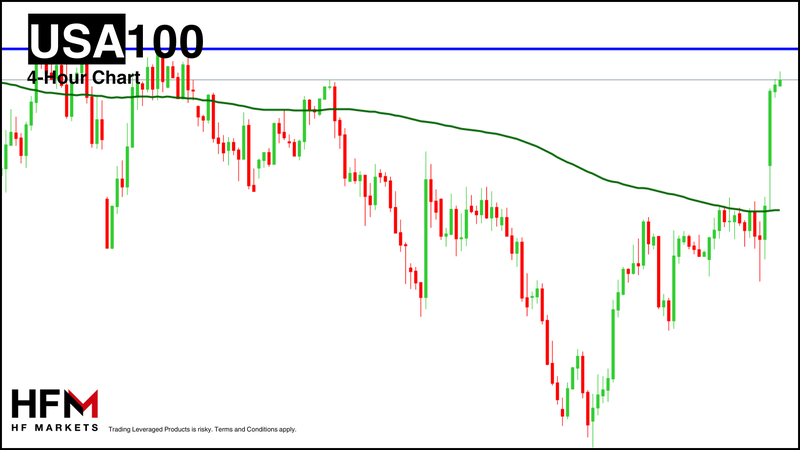
HFM NASDAQ 4-Hour Chart
According to the Fed Watch Tool, the possibility of a rate hike in April is now low and the possibility of a rate cut in the summer has returned. This is having a strong impact on the stock market in general, with all global indices rising. However, most economists advise that inflation will not allow the Federal Reserve to cut rates.
Later in the week, the US will announce the latest inflation rate, where analysts expect inflation to rise to 3.5%. The higher inflation rises, the more pressure will be applied on the NASDAQ and stocks in general.
Notably, in a joint interview for The Indicator from Planet Money, two US Federal Reserve officials, Cleveland Fed President Beth Hammack and Chicago Fed President Austan Goolsbee, stressed that inflation remains a greater concern than labour market conditions, reinforcing expectations of further US monetary tightening. Goolsbee specifically warned that tariff-driven price pressures, combined with rising energy costs amid escalating Middle East tensions, could trigger a ?stagflationary shock?.
Currently, over 95% of the components within the NASDAQ are trading higher on Wednesday. In addition to this, the Put-Call ratio is falling along with the VIX (-12%). These factors indicate bullish price movement for the NASDAQ, but may not indicate a new all-time high. However, a full correction to the previous average price would see the target close to $25,191.
Gold Rebounds As Bond Yields Fall
The price of Gold is now trading at its highest price since March 19. A key factor for the price of Gold is the decline in the US Dollar as well as lower bond yields.
Bond yields are trading at 4.2380, the lowest since March 17. If bond yields continue to fall, particularly if below 4.2000, the price of Gold can find significant support. In addition to this, the US Dollar has also fallen 1.25%, also supporting the price of the commodity.
The global gold market is currently worth about $31.0 trillion. By the end of 2025, humanity had mined nearly 220 thousand tons of gold, according to the World Gold Council. Jewellery holds the largest share at 44.0%. Bullion and coins account for 21.0%, while central bank reserves make up 18.0%. Industrial use represents 10.0%, over-the-counter investments 5.0%, and ETFs 2.0%.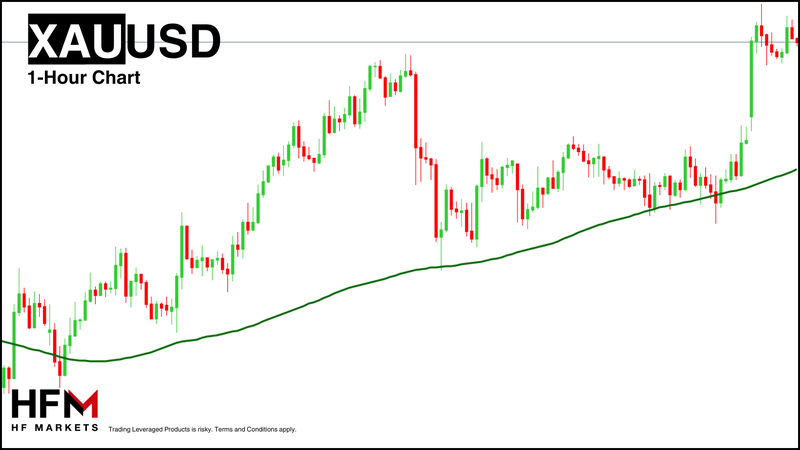
HFM Gold 1-Hour Chart
Key Takeaways:
* Markets reversed sharply after a US?Iran ceasefire, with oil dropping 21% while equities and gold surged.
* The reopening of the Strait of Hormuz eased supply fears, but the agreement remains short-term and uncertain.
* Stock market sentiment improved on lower yields and rate cut expectations, though inflation remains a key risk.
* Gold strengthened as bond yields and the US Dollar declined, supporting demand for safe-haven assets
Always trade with strict risk management. Your capital is the single most important aspect of your trading business.
Please note that times displayed based on local time zone and are from time of writing this report.
Click HERE to access the full HFM Economic calendar.
Want to learn to trade and analyse the markets? Join our webinars and get analysis and trading ideas combined with better understanding of how markets work. Click HERE to register for FREE!
Click HERE to READ more Market news.
Michalis Efthymiou
HFMarkets
Disclaimer: This material is provided as a general marketing communication for information purposes only and does not constitute an independent investment research. Nothing in this communication contains, or should be considered as containing, an investment advice or an investment recommendation or a solicitation for the purpose of buying or selling of any financial instrument. All information provided is gathered from reputable sources and any information containing an indication of past performance is not a guarantee or reliable indicator of future performance. Users acknowledge that any investment in Leveraged Products is characterized by a certain degree of uncertainty and that any investment of this nature involves a high level of risk for which the users are solely responsible and liable. We assume no liability for any loss arising from any investment made based on the information provided in this communication. This communication must not be reproduced or further distributed without our prior written permission.
Offline
#1538 09-04-2026 11:38:42
- HFM
- Member
- Registered: 26-06-2014
- Posts: 2041
Re: hotforex.com - Market analysis and news.
Date: 9th April 2026.
Oil Outlook Uncertain as Hormuz Stays Shut, High-Yield Currencies Rebound.
Trading Leveraged products is Risky
Oil prices are again increasing in value after witnessing a significant drop the previous day. The main drivers for the upward price movement are the Strait of Hormuz remaining closed and Iran insisting that ships can pass after paying a duty fee.
As the US and Iran came to an agreement to start a 15-day ceasefire in order to allow time for negotiations, the price of Crude Oil fell 22%. The price has since risen 8% but still remains lower than the previous price range from the week before. The projections and possible trends within Oil will likely depend on two factors. The first is if the negotiations will end with an agreement or if the conflict will resume. The second is whether oil tankers will start moving through the Strait and if they will indeed be charged.
Crude Oil Latest Developments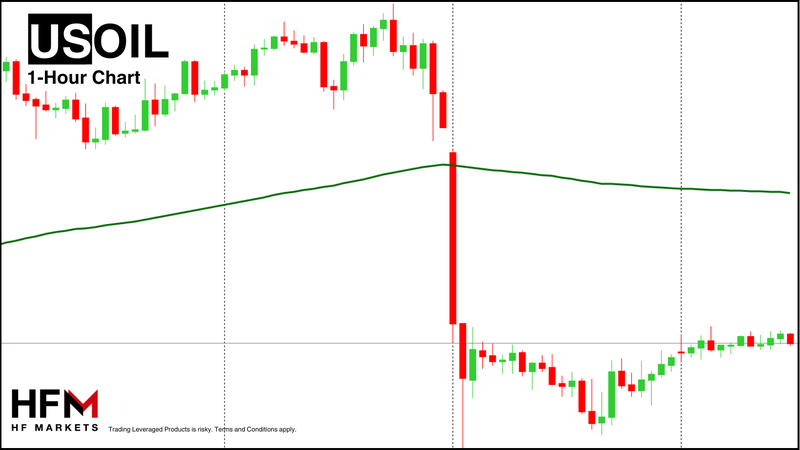
HFM - Crude Oil 1-Hour Chart
The US and Iran are preparing for talks in Islamabad tomorrow in order to attempt to come to an agreement. The US has advised that Vice President JD Vance will be attending the talks. Iran has stated it has achieved its strategic objectives and has rejected US proposals, instead presenting its own conditions. These include controlling tanker transit through the Strait of Hormuz via the IRGC, ending hostilities, and receiving reparations.
Both sides aim to reach a final agreement within 15 days, although this may be extended. However, if an agreement is not reached, there is a possibility of the conflict resuming. If it does resume, it would again impact oil prices and global inflation.
So far, the development has allowed the price of both Crude and Brent oil to fall. However, the decline has continued for a second day due to concerns over the shipping route. Iran has agreed to reopen the Strait of Hormuz for two weeks but will maintain full control over transit. Authorities plan to charge fees for vessels passing through, with estimates ranging from $2.0M per tanker to $1 per barrel, while empty ships may pass for free.
Each tanker must notify Iranian authorities in advance and receive approval before transit. Officials have warned that any unauthorised vessels could face severe consequences.
Currency Reaction - NZD and AUD Back On Top!
Since the ceasefire agreement was made public, the market was quick to unwind previous trades and return to a similar scenario to before the conflict began. As a result, the currencies which are benefiting most are the New Zealand Dollar and Australian Dollar. Over the past week, the NZD has risen 1.85% and the AUD 1.73%.
The worst-performing currencies have been the US Dollar and the Japanese Yen. Investors are reducing their exposure to safe-haven currencies and returning to currencies which are currently least at risk to trade tensions and offer higher interest rates. Both the Reserve Bank of Australia and New Zealand are among the most hawkish central banks at the moment.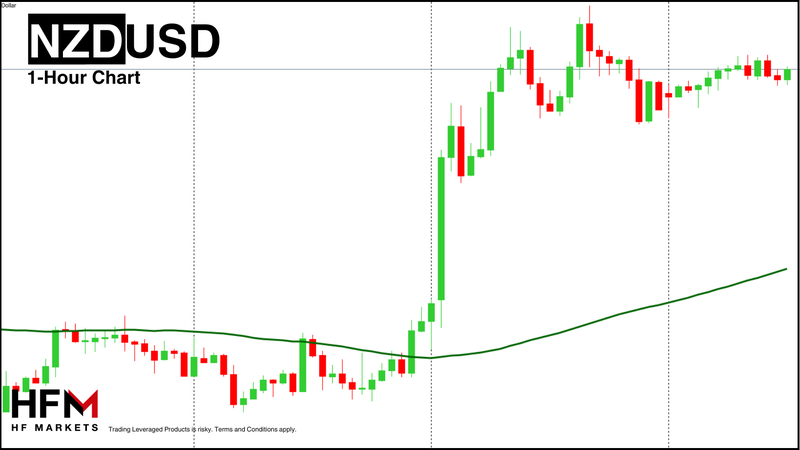
HFM - NZDUSD 1-Hour Chart
Silver (XAGUSD) - Demand Continues to Grow
The price of Silver is experiencing both up and down volatility despite the strong decline in the price of the US Dollar. Nonetheless, many economists expect the long-term outlook for Silver to remain positive because demand continues to be stronger than supply. According to the Silver Institute, the market will face a supply shortage for the sixth consecutive year. It forecasts a deficit of 67 million ounces this year, bringing the total five-year shortage to more than 800 million ounces.
Although supply is still growing, it is not increasing fast enough to meet demand. Total supply is expected to rise by 1.5% to 1.05 billion ounces, while mine production may grow by 1.0% and recycled silver by 7.0%. At the same time, silver stocks on COMEX have fallen sharply in recent months, showing that available silver in the market is becoming more limited.
Key Takeaways:
* Oil rebounded after Tuesday?s sharp drop, as uncertainty over Hormuz transit and Iranian duty fees revived supply concerns.
* The next move in oil will depend on whether negotiations succeed and whether tanker traffic resumes normally.
* Risk sentiment improved after the ceasefire, lifting the NZD and AUD while the USD and JPY weakened.
* Silver?s long-term outlook remains positive, as demand continues to outpace supply for a sixth straight year.
Always trade with strict risk management. Your capital is the single most important aspect of your trading business.
Please note that times displayed based on local time zone and are from time of writing this report.
Click HERE to access the full HFM Economic calendar.
Want to learn to trade and analyse the markets? Join our webinars and get analysis and trading ideas combined with better understanding of how markets work. Click HERE to register for FREE!
Click HERE to READ more Market news.
Michalis Efthymiou
HFMarkets
Disclaimer: This material is provided as a general marketing communication for information purposes only and does not constitute an independent investment research. Nothing in this communication contains, or should be considered as containing, an investment advice or an investment recommendation or a solicitation for the purpose of buying or selling of any financial instrument. All information provided is gathered from reputable sources and any information containing an indication of past performance is not a guarantee or reliable indicator of future performance. Users acknowledge that any investment in Leveraged Products is characterized by a certain degree of uncertainty and that any investment of this nature involves a high level of risk for which the users are solely responsible and liable. We assume no liability for any loss arising from any investment made based on the information provided in this communication. This communication must not be reproduced or further distributed without our prior written permission.
Offline
#1539 10-04-2026 19:12:18
- HFM
- Member
- Registered: 26-06-2014
- Posts: 2041
Re: hotforex.com - Market analysis and news.
Date: 10th April 2026.
Why Is Middle Eastern Geopolitics Dictating the Fate of the South African Rand?
Trading Leveraged products is Risky
Global financial markets have just experienced a three-day period resembling an emotional rollercoaster. After strengthening sharply to 16.24 per USD thanks to optimism surrounding a ceasefire on April 8, the South African Rand is now once again on the verge of systemic weakness. Tehran's re-closure of the Strait of Hormuz and the intensification of attacks in Lebanon have erased the risk premium that had subsided.
As a high-beta currency, the Rand is highly susceptible to the risk-off phenomenon. When uncertainty increases, investors tend to abandon emerging market assets and turn to safe havens. However, the main driver this time is not simply sentiment, but energy fundamentals: South Africa is a net energy importer. Any spike in oil prices due to disruptions to global supply chains automatically puts pressure on the current account and triggers expectations of higher domestic inflation.
Monetary Dilemma: Between the SARB and the Shadow of the Fed
The current dynamics of the USDZAR are no longer traded solely based on the individual fundamentals of each country, but rather on the complex interaction between central bank policy and global inflation.
* SARB's Transformation: The South African Reserve Bank (SARB) has shifted its narrative from dovish to highly cautious. With interest rates at 6.75%, the SARB's room for maneuver has narrowed. Although inflation briefly touched its 3% target, the risk of imported inflation due to the weakening Rand and soaring fuel prices forced the central bank to delay the rate cut cycle.
*Dollar Dominance and US Yields: Although the dollar index (DXY) briefly slipped below 99, market attention is now fully focused on the release of the March CPI data. If US inflation data exceeds expectations, the "higher for longer" narrative will regain strength, pushing US bond yields up and putting double pressure on emerging market currencies like the Rand.
Strategic Projection
Given the current price structure, the USDZAR is expected to remain trapped in a high volatility corridor.
* Pessimistic Scenario (Bearish ZAR): If peace negotiations fail and the Strait of Hormuz remains closed, we will see massive capital flight that could push USDZAR beyond 16.50. The combination of oil prices around $100 and a strengthening dollar would be a devastating catalyst for South African assets.
* Optimistic Scenario (Bullish ZAR): The rand will only gain sustained upward momentum if the ceasefire is fully implemented and expectations of a Fed rate cut return to the table due to declining US inflation.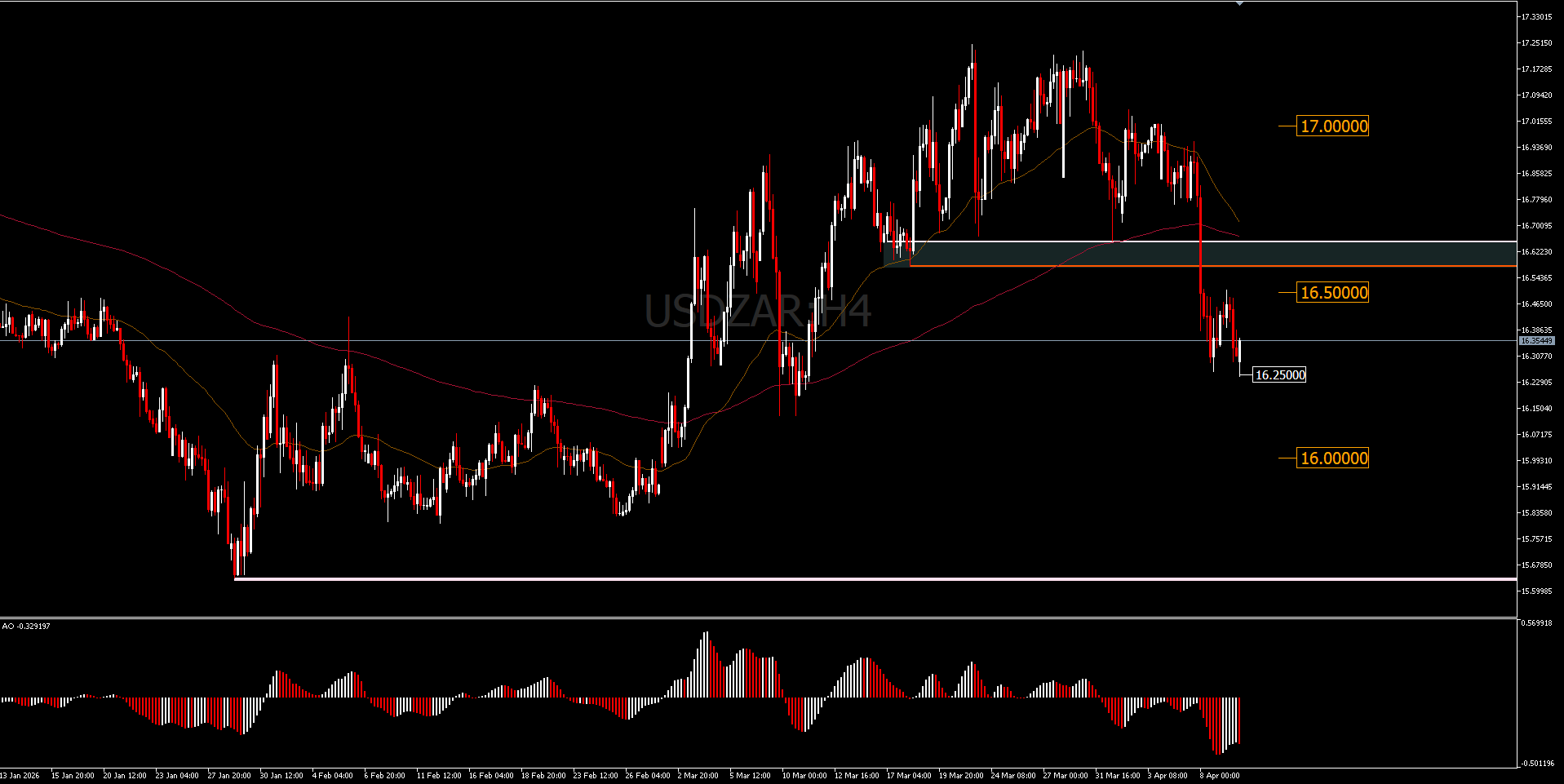
Technically, USDZAR is currently in a critical transition phase, where failure to maintain the psychological level of 17.00 has triggered a sharper correction. The dominance of negative histograms on the Awesome Oscillator (AO) confirms the presence of strong bearish momentum, indicating that the current selling pressure is not merely a temporary fluctuation but a real threat to the previous uptrend structure. If the price consistently closes below 16.25, validating a decline towards the round 16.00 level becomes a very logical technical scenario.
Fundamentally, this movement reflects the Rand's sensitivity as a high-beta asset to geopolitical risks in the Middle East and the uncertainty of the global inflation path. Although the SARB's 6.75% interest rate cushion provides an interest rate cushion, South Africa's dependence on energy imports makes the currency highly vulnerable to shocks in the Strait of Hormuz. Therefore, the future direction of the USDZAR will depend largely on whether risk-off sentiment subsides, allowing a recovery above 16.50, or whether strong US inflation data will push the pair back to test resistance at 17.00.
Elegantly, the USDZAR currently reflects the fragility of global stability. As long as geopolitical risks in the Middle East remain a volatile variable, South Africa's domestic economic fundamentals will remain under the shadow of global energy price fluctuations.
Always trade with strict risk management. Your capital is the single most important aspect of your trading business.
Please note that times displayed based on local time zone and are from time of writing this report.
Click HERE to access the full HFM Economic calendar.
Want to learn to trade and analyse the markets? Join our webinars and get analysis and trading ideas combined with better understanding of how markets work. Click HERE to register for FREE!
Click HERE to READ more Market news.
Ady Phangestu
HFMarkets
Disclaimer: This material is provided as a general marketing communication for information purposes only and does not constitute an independent investment research. Nothing in this communication contains, or should be considered as containing, an investment advice or an investment recommendation or a solicitation for the purpose of buying or selling of any financial instrument. All information provided is gathered from reputable sources and any information containing an indication of past performance is not a guarantee or reliable indicator of future performance. Users acknowledge that any investment in Leveraged Products is characterized by a certain degree of uncertainty and that any investment of this nature involves a high level of risk for which the users are solely responsible and liable. We assume no liability for any loss arising from any investment made based on the information provided in this communication. This communication must not be reproduced or further distributed without our prior written permission.
Offline
#1540 13-04-2026 09:06:10
- HFM
- Member
- Registered: 26-06-2014
- Posts: 2041
Re: hotforex.com - Market analysis and news.
Date: 10th April 2026.
US Dollar, Oil & Euro Analysis: Safe-Haven Demand Rises As Negotiations Fail.
Trading Leveraged products is Risky
The US Dollar fell to its lowest level since the first days of the US-Iran war as inflation rose less than previously thought. The Dollar and financial markets more broadly now appear different after the US withdrew from negotiations. In addition to the negotiations failing, the US are advising that they will place a blockade on the straits this afternoon.
As a result, the US Dollar instantly rose 0.43% this morning, and Crude Oil again rose above $100.
The US Dollar Remains The Favoured Safe Haven Asset
Generally, lower inflation figures are known to have a negative impact on the currency. At first, the US Dollar did dip to a 6-week low, but without being able to maintain momentum. So, why did the US Dollar rebound?
The US inflation rate rose from 2.4% to 3.3% but fell below analysts? previous expectations. Analysts were previously expecting the inflation rate to rise between 3.4-3.5%. However, traders remain focused on rising inflation and the fact that the outlook for interest rates remains unchanged. According to the Chicago Exchange, there is an 83% chance of no rate cuts in 2026, a 3% chance of a small hike and a 13% chance of a 0.25% cut.
For this reason, the Federal Reserve's monetary policy remains relatively restrictive, supporting the US Dollar. Also, the inflation rate reading lower is prompting a positive real bond yield. As a result, the Dollar remains an attractive hedge against inflation.
Regardless of the above, the US Dollar?s safe haven status is also playing a large role on Monday. The US military said it will begin a blockade on Monday targeting vessels entering or leaving Iranian ports after weekend talks in Islamabad failed to secure a deal, putting the fragile two-week ceasefire at risk. This development is creating a ?risk-off? appetite on Monday.
Ships travelling to non-Iranian ports through the Strait of Hormuz will still be allowed to pass. However, Washington warned it would intercept any vessel that pays a toll to Iran, signalling renewed tensions.
Crude Oil Back Above $100 Per Barrel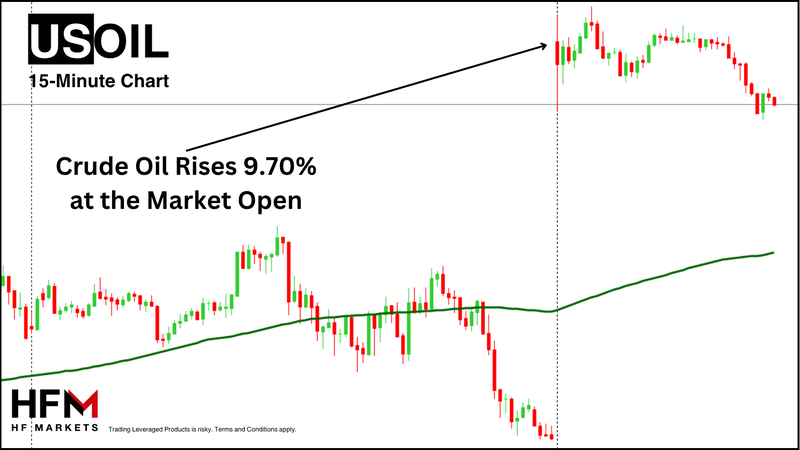
HFM - Crude Oil 15-Minute Chart
For Crude Oil, the main price driver remains the developments in the Middle East, with negotiations failing and the attempt to block the Straits. The asset opened trading with a bullish price gap of 9.77% and rose to a high of $105.65. Analysts advise that forward guidance is not necessarily reliable, as the price is driven day by day by ongoing developments.
If the Iranians return to the negotiating table, the price is likely to fall back closer to $97. However, if the conflict escalates again, the price can rise to above $110.
Euro ? Hungary Elections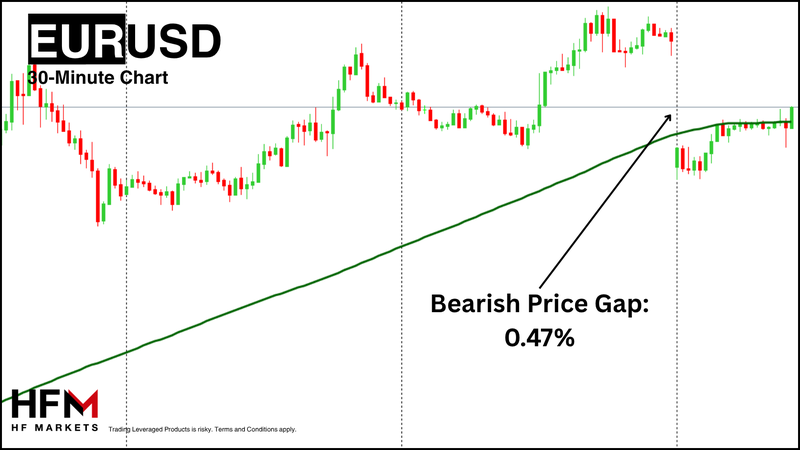
HFM - EURUSD 30-Minute Chart
The latest developments coming out of the Euro are from its far eastern flank, Hungary. Hungary?s election saw 79% of its population vote for a new Prime Minister and party after 16 years of the same party rule. The new Prime Minister, Peter Magyar, is sceptical of Europe but is a supporter of the EU. Generally, Europe view him as an easier partner than Viktor Orban, who sided more with Russia and the US.
The move may seem positive for the Euro; however, the outlook continues to remain the same. Currently, due to the dollar's strength, the Euro is likely to remain shaky. Currently, the Euro Index is trading 0.36% lower due to the decline against the Dollar. Of the nine main currencies, the Euro is currently the fifth-best-performing.
Furthermore, March inflation data from Germany showed that the consumer price index rose by 0.2% to 1.1% month-on-month, while annual inflation increased from 1.9% to 2.7%. The harmonised index also accelerated, rising from 0.4% to 1.2% monthly and from 2.0% to 2.8% annually, mainly due to higher energy prices linked to the Middle East conflict. Even so, the European Central Bank expects inflation expectations to remain contained, reducing the need for further monetary tightening.
Key Takeaways:
* The US Dollar rebounded as traders focused on steady rate expectations and a positive real bond yield.
* Markets show renewed safe-haven demand after the US withdrew from negotiations.
* Rising geopolitical tensions pushed crude oil back above $100, with failed talks and a possible blockade driving fresh supply fears.
* Lower-than-expected US inflation weakened the Dollar only briefly, as restrictive Fed policy continues to support the currency.
* The Euro faces mixed pressure, with stronger German inflation offset by Dollar strength and limited expectations for further ECB tightening.
Always trade with strict risk management. Your capital is the single most important aspect of your trading business.
Please note that times displayed based on local time zone and are from time of writing this report.
Click HERE to access the full HFM Economic calendar.
Want to learn to trade and analyse the markets? Join our webinars and get analysis and trading ideas combined with better understanding of how markets work. Click HERE to register for FREE!
Click HERE to READ more Market news.
Michalis Efthymiou
HFMarkets
Disclaimer: This material is provided as a general marketing communication for information purposes only and does not constitute an independent investment research. Nothing in this communication contains, or should be considered as containing, an investment advice or an investment recommendation or a solicitation for the purpose of buying or selling of any financial instrument. All information provided is gathered from reputable sources and any information containing an indication of past performance is not a guarantee or reliable indicator of future performance. Users acknowledge that any investment in Leveraged Products is characterized by a certain degree of uncertainty and that any investment of this nature involves a high level of risk for which the users are solely responsible and liable. We assume no liability for any loss arising from any investment made based on the information provided in this communication. This communication must not be reproduced or further distributed without our prior written permission.
Offline