You are not logged in.
Pages: 1
- Index
- » Analyses / Forecasts (by major banks and brokers)
- » OPEP signs an agreement, while U.S. unemployment continues to climb
#1 13-04-2020 10:35:59
- johnedward
- Admin & Trader

- From: Paris - France
- Registered: 21-12-2009
- Posts: 3861
- Website
OPEP signs an agreement, while U.S. unemployment continues to climb
OPEP signs an agreement, while unemployment continues to climb in both Canada and the U.S.
Last week's U.S. employment figures showed that 7 million more people are unemployed. These figures were released as part of the weekly unemployment claims, which in the last fewweeks have seen the number of people unemployed due to the virus situation approach 10 million people. These figures are the worst in American history, and they will likely as no definitive outcome to this crisis has been established.
With these latest figures, this means that in the last two weeks alone, a total of 17 million people have claimed unemployment benefits in the world's largest economy. Indeed, for the first time since 2009, the unemployment rate in the United States has risen. It was under 4%, but it quickly rose to 4.4% when the latest non-farm payroll figures were released.
Many believe that the U.S. unemployment trend will continue to rise throughout this month. If this trend continues, we estimate that when the NFP data is released next month, we may see as many as 19 million people unemployed. If these estimates are correct, the unemployment rate will be closer to 9.9%, which will be a new record. Some estimates suggest that the unemployment rate could even reach 14%, which would be higher than the 9.8% seen at the height of the previous recession.
Up north, the numbers are equally bad. Canada's unemployment rate jumped from 5.5% to 8.0% when the net change in employment figures for last month was released.
Movement in the gold market
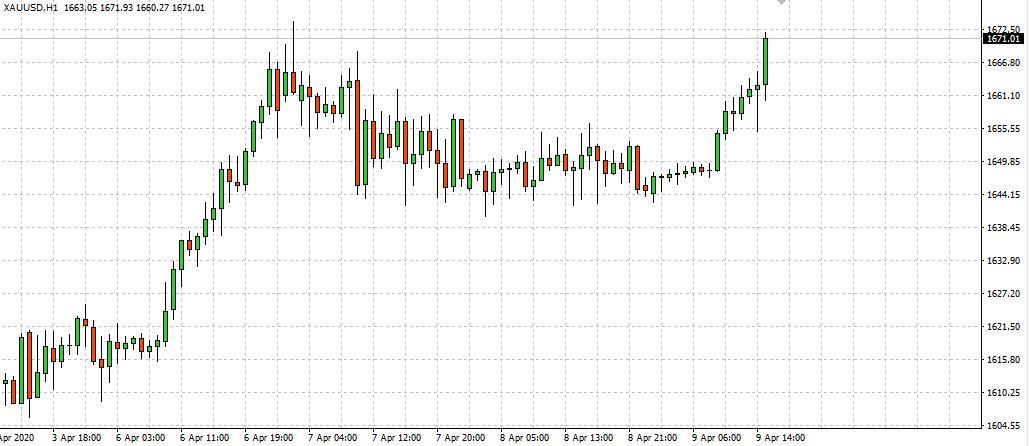
When the numbers came out, gold markets rallied and climbed to $10 in just a few minutes when the race to the safe haven began. Prices reached the recent high of $1669, as shown in the below gold chart. However, as this is price resistance, many fear that it is temporary uncertainty, before prices react further.
In addition to the number of unemployed, the FED has announced that it will essentially support the U.S. economy. As Fed's Powell says, "we will provide as much support and stability as we can". This sentiment seems to be the same in all central banks and most governments around the world. This crisis is not specific to an industry like the one we experienced 12 years ago. These actions show that the "too big to fail" label has now transcended financial markets.
OPEC+ decision
OPEC+ also met last week to discuss possible production cuts. At the start of the meeting it was announced that Russia would be prepared to cut its supply by over 1 million barrels a day, but tensions with the Saudi Arabians were one of the main potential obstacles to an agreement. If an agreement was reached, it is likely that the price of oil would slowly but steadily rise back to the $29 mark. However, any further tension within the cartel could lead to a return of the crude oil market to its lowest level.
"Anything worth having is worth going for - all the way." - J.R. Ewing
Offline
Pages: 1
- Index
- » Analyses / Forecasts (by major banks and brokers)
- » OPEP signs an agreement, while U.S. unemployment continues to climb