You are not logged in.
Pages: 1
- Index
- » Analyses / Forecasts (by major banks and brokers)
- » Have the U.S. markets already hit the bottom of this virus situation?
#1 12-05-2020 13:26:44
- johnedward
- Admin & Trader

- From: Paris - France
- Registered: 21-12-2009
- Posts: 3861
- Website
Have the U.S. markets already hit the bottom of this virus situation?
Have the U.S. markets already hit the bottom of this virus situation?
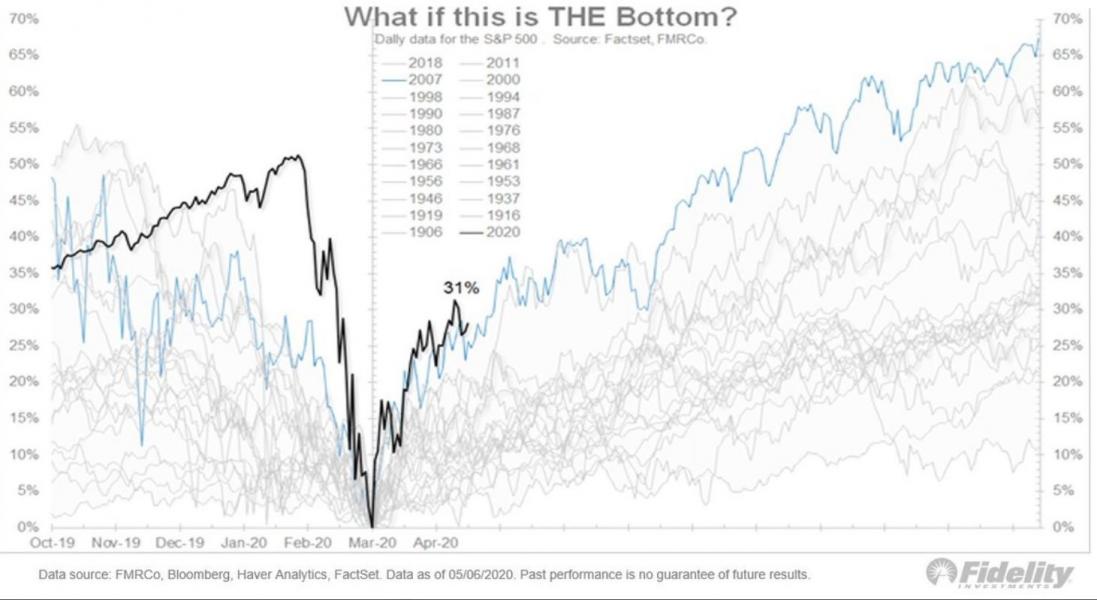
Last week's strong U.S. stock market close poses a dilemma for traders: has the bottom already been hit or will we see another attempt at a low?
Long-term traders differ from speculators in that they tend to add funds during market downturns. Of course, it is the definition of a market low that makes the difference.
For some, a drop in percentages from the peak is enough to send new capital to certain stocks. The larger the market declines, the more traders buy.
But there is one thing that speculators and traders fear: the possibility of missing out on stock.
"Fear of Missing Out" dictates price action
This so-called "FOMO" is responsible for most of the recent market increases. At the beginning of the virus situation, the decline in the stock market was so severe that many voices called for a complete shutdown of the market.
In fact, on a few occasions, the market activated protective devices. This is a defensive mechanism that has been in place for decades to protect traders from unsustainable market behaviour. A drop of more than 6%, 12% and 19% triggers a market halt - trading takes a break because the market is limited. This is known as a "downward limit".
The fall has been so rapid that it has set the record for the largest market decline in history. Yet it has already rebounded 29% from the lows, and the FOMO indicates that pressure is still on the rise.
While many are focusing on the broken indicators and misleading data from the virus situation, investors are buying. Whether they are institutional traders, high net worth individuals or sovereign wealth funds.
It is said that a drop or a rise of more than 19% from top to bottom makes the difference between bull and bear markets. Using this measure, the current 29% rise is well above this threshold, indicating that we are not only in a bull market, but also in a market that continues to rise.
Throughout history, traders who gambled on gloom have not been successful in the stock market. In the end, optimism prevails.
The stock market being a leading economic indicator, it suggests that investors' risk appetite still remains high.
"Anything worth having is worth going for - all the way." - J.R. Ewing
Offline
Pages: 1
- Index
- » Analyses / Forecasts (by major banks and brokers)
- » Have the U.S. markets already hit the bottom of this virus situation?