You are not logged in.
Pages: 1
- Index
- » Analyses / Forecasts (by major banks and brokers)
- » Forex trading during the virus situation
#1 08-06-2020 10:23:05
- johnedward
- Admin & Trader

- From: Paris - France
- Registered: 21-12-2009
- Posts: 3861
- Website
Forex trading during the virus situation
Forex trading during the virus situation
Beyond the current recession, the virus situation hasn't created market conditions similar to those of the last crisis. During the financial crisis 12 years ago, volatility in the forex was way higher.
After the initial shock that saw many economies enter a lockdown phase, the response of many central banks was to ease monetary policy fast. As a result, exchange rates that reflect the value of one currency relative to another did not respond in the same way as they did 12 years ago. The initial long trading in USD, the classic rush to safety trading, was quickly replaced by a wave of selling of the global reserve currency.
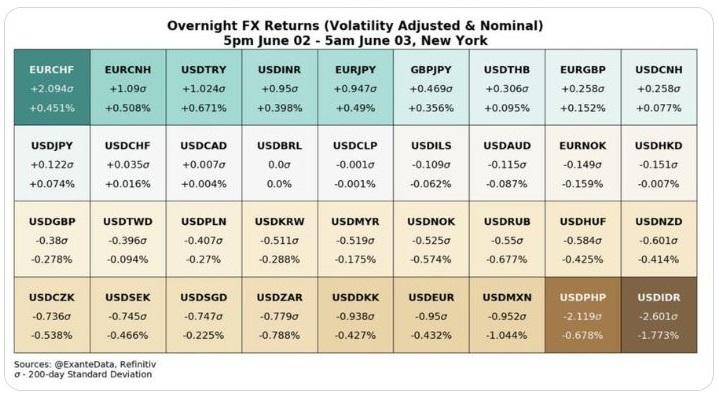
Recent large currency movements
Now that a few months have elapsed after the initial shock of the virus, significant currency movements are on the horizon. At both extremes, the EURCHF cross and the US dollar vs. Indian Rupee have seen movements of more than two standard deviations on a table comparing several cross assets.
Perhaps the biggest surprise is the EURCHF cross. Long regarded as the Swiss National Bank's "troublemaker", it caused a small industrial shock when the SNB lowered the fixed exchange rate floor by 1.19 over 5 years ago. This was the first time that the SNB had ever lowered the fixed exchange rate. Since then, it has rarely had overnight yields in excess of two standard deviations, being consistently sold on every bounce. Not this month, though!
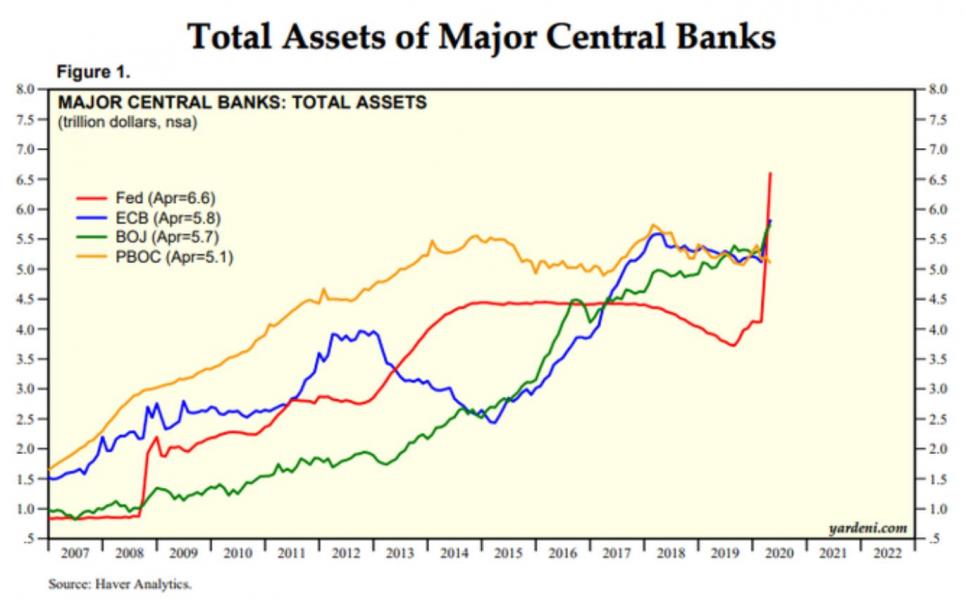
As for USD currency pairs, the global liquidity of the USD continues to improve - the spread between Eurodollars and Treasury bills is below the pre-pandemic benchmark. In addition, central banks around the world are rushing to expand balance sheets, with the Fed outpacing the other banks in terms of size and speed.
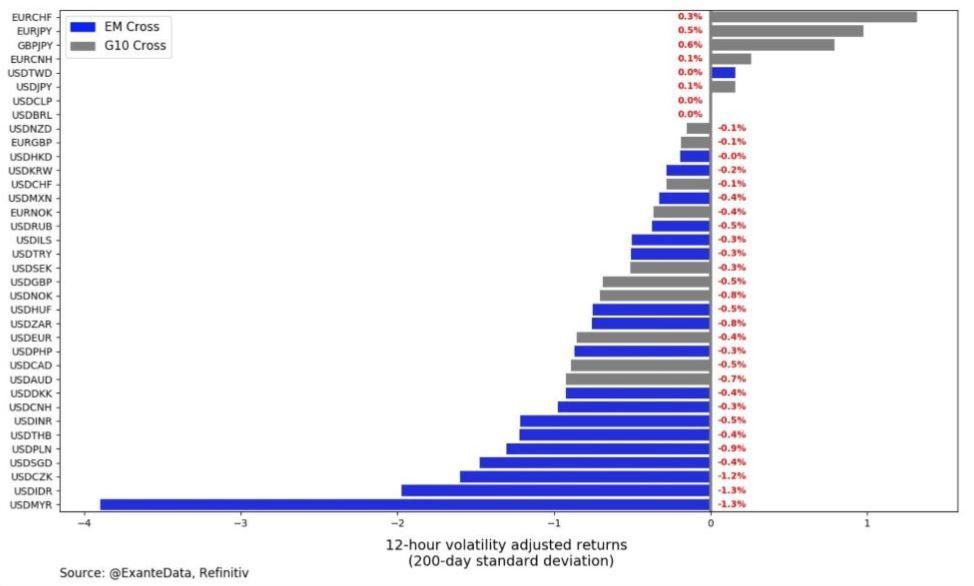
As a result, the beginning of this month brought high levels of volatility on the cross-pairs, which have not fluctuated as much during this crisis. Some JPY pairs (EURJPY, GBPJPY, USDJPY) outperformed.
Going forward, the focus will be on the global reserve currency. Already in decline after the Fed opened swap lines, it has fallen dramatically, particularly against developed market currencies (such as the AUD, NZD, GBP, EUR).
Will this trend continue throughout the rest of this month?
"Anything worth having is worth going for - all the way." - J.R. Ewing
Offline
Pages: 1
- Index
- » Analyses / Forecasts (by major banks and brokers)
- » Forex trading during the virus situation