You are not logged in.
Pages: 1
- Index
- » Analyses / Forecasts (by major banks and brokers)
- » USD: higher than expected inflation is hurting the US dollar
#1 15-04-2021 15:00:33
- johnedward
- Admin & Trader

- From: Paris - France
- Registered: 21-12-2009
- Posts: 3861
- Website
USD: higher than expected inflation is hurting the US dollar
USD: higher than expected inflation is hurting the US dollar
U.S. inflation rises, boosting stocks and lowering the greenback.
The most important economic data of the week was released this week - the U.S. inflation figure for March. The data exceeded expectations, as many traders assumed, leading to a widespread decline in the dollar.
After a brief dip below 1.19 on the news release, the EUR/USD pair rose above 1.1950 by the end of the trading day. Similar action was seen in other dollar pairs as investors fearing rising inflation fled the dollar.
It's not as if the market was taken by surprise. The monetary and fiscal authorities have taken extraordinary measures since the virus outbreak. Monetary and fiscal policies are still expansionary, raising fears of even higher inflation.
Even the Fed has suggested that inflation will exceed the target at some point. Last year, the Fed changed its price stability mandate from 2% to "average 2%" suggesting to market participants that higher prices are in store.
Recently released economic data also hinted at higher prices: increases are more common in retail than in wholesale trade, and the net share of firms planning to raise prices remains high (34%). The inflation data thus delivered what was most feared - higher inflation.
Inflation expected to peak around 3.8% next month
With last months data, U.S. inflation has reached 2.7%, and the gradual rise will likely continue in the months ahead. However, as base effects begin to settle down (e.g., energy prices, supply chain strains), inflation should peak around 3.8% next month.
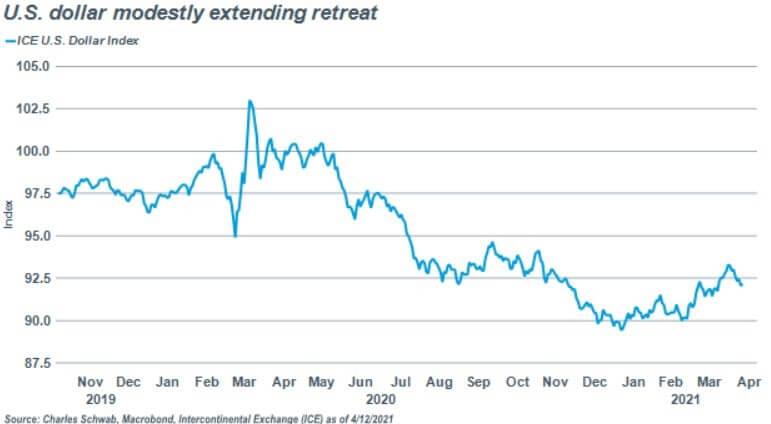
What does this mean for currency traders? The dollar has strengthened across the board since the end of last year, mainly due to the correction in the EUR/USD from 1.23 to 1.17 a few weeks ago. Since the EUR/USD exchange rate weighs the most in the dollar index, the index rebound should not be a surprise.
However, EUR/USD has found strong support at the 1.17 level as the European Central Bank (ECB) has recently made hawkish statements. For example, there is no sign of a significant increase in PEPP purchases - a hawkish development for the euro.
Thus, a hawkish development for the EUR, coupled with a dovish development for the USD (e.g., higher inflation), has contributed to the recent rally to 1.20. This would be the key for EUR/USD in terms of short-term resistance. A break and hold above it should trigger more stops.
"Anything worth having is worth going for - all the way." - J.R. Ewing
Offline
Pages: 1
- Index
- » Analyses / Forecasts (by major banks and brokers)
- » USD: higher than expected inflation is hurting the US dollar