You are not logged in.
Pages: 1
- Index
- » Analyses / Forecasts (by major banks and brokers)
- » EUR/USD: The trade-weighted US dollar downtrend continues
#1 11-05-2021 14:46:27
- johnedward
- Admin & Trader

- From: Paris - France
- Registered: 21-12-2009
- Posts: 3861
- Website
EUR/USD: The trade-weighted US dollar downtrend continues
EUR/USD: The trade-weighted US dollar downtrend continues
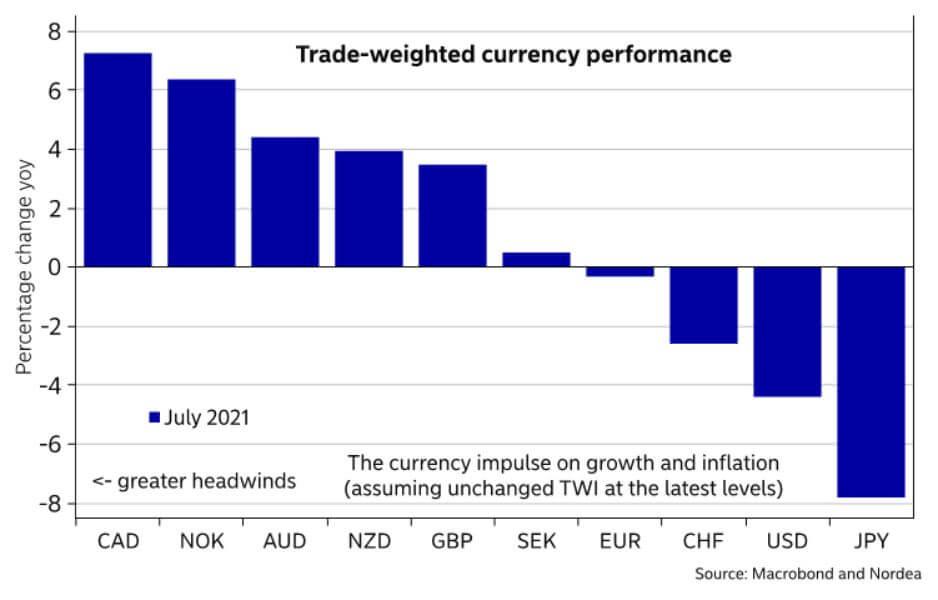
The trade-weighted US dollar could fall by 5% year-on-year by mid-summer. What does this mean for traders who fear rising inflation?
The US dollar continues to fall after weaker than expected US employment data for last month. Last week's 2021 NFP report showed that the US economy added fewer jobs than economists had expected.
This low figure is not the result of the US economy's inability to create jobs, but rather people's reluctance to find usage. In many cases, unemployment benefits are higher than what most people earned working before the pandemic.
So this unusual situation has led to an unusual market response. Why unusual? Because the dollar has been falling for several weeks - the EUR/USD exchange rate has fallen from 1.17 to 1.21 since the beginning of last month. During this period, market sentiment was driven by a stronger economy and a presumably healthy usage market. However, when the data showed otherwise, the dollar fell. Once again, the market reaction shows us the complexity of the 'trading game'.
Plenty of jobs are available, but they're hard to fill
After the NFP report, it became clear that there are plenty of uses but they are hard to fill. People are not willing to work for the same salary as before, partly because of inflation fears.
The Fed suggested that inflation would rise above the 2% level when it changed its mandate last year. Now the Fed is targeting an average of 2% over a given period, which means it will allow inflation to rise above that level. How long and by how much remains to be seen.
In the meantime, employers face a difficult decision: to pay more as wage growth pressures increase rapidly, or to continue to struggle to find staff. Hiring and firing is an expensive process, which is one of the reasons why the unemployment rate is a lagging indicator. Therefore, when faced with a labour shortage, the easiest route for employers is simply to offer higher wages.
The Fed is in wait-and-see mode, repeatedly saying that inflation is transitory, which may well be the case.
In the meantime, if the trade-weighted US dollar remains at its current level, it will have fallen by 5% a year by mid-summer. This would be another inflationary impulse from rising import costs.
In summary, the US economy is at a crossroads. On the one hand, it has rebounded so quickly from its low point that it is now struggling to fill the uses created by that rebound. On the other hand, the weakness of the currency is helping to boost exports, while reflecting inflationary pressures.
The rest of the year will ultimately shape the US economy for years to come. Make no mistake, the Fed is watching closely. 
"Anything worth having is worth going for - all the way." - J.R. Ewing
Offline
Pages: 1
- Index
- » Analyses / Forecasts (by major banks and brokers)
- » EUR/USD: The trade-weighted US dollar downtrend continues