You are not logged in.
Pages: 1
- Index
- » Analyses / Forecasts (by major banks and brokers)
- » AUD/USD: the AUD declining despite positive job numbers
#1 23-08-2021 09:23:24
- johnedward
- Admin & Trader

- From: Paris - France
- Registered: 21-12-2009
- Posts: 3861
- Website
AUD/USD: the AUD declining despite positive job numbers
AUD/USD: the AUD declining despite positive job numbers
Australia's unemployment rate fell in July to 4.5% from 5.0% in June. The market had expected it to rise to 5.1% due to renewed concerns about the virus. Still, the better data didn't help the AUD, which had one of its worst weeks this year.
Employment numbers are one of the most important pieces of economic data in an economy. This is usually market-moving data, so traders tend to pay attention to how the actual numbers differ from market expectations.
Australia and New Zealand are facing a new wave of economic restrictions. Lockdowns have hit both economies recently, and thus economic activity has been negatively affected.
For this reason, expectations for last month's employment data in Australia were quite gloomy. Market participants were expecting the unemployment rate to rise to 5.1%, up from 5.0% the previous month, and for the economy to lose 43,000 jobs.
Instead, the unemployment rate came in at 4.5 percent, which was much better than expected. In addition, the economy created 2,350 new jobs instead of losing 43,000.
Yet the Australian dollar remained under pressure. In fact, it was after the jobs data was released that the selling accelerated.
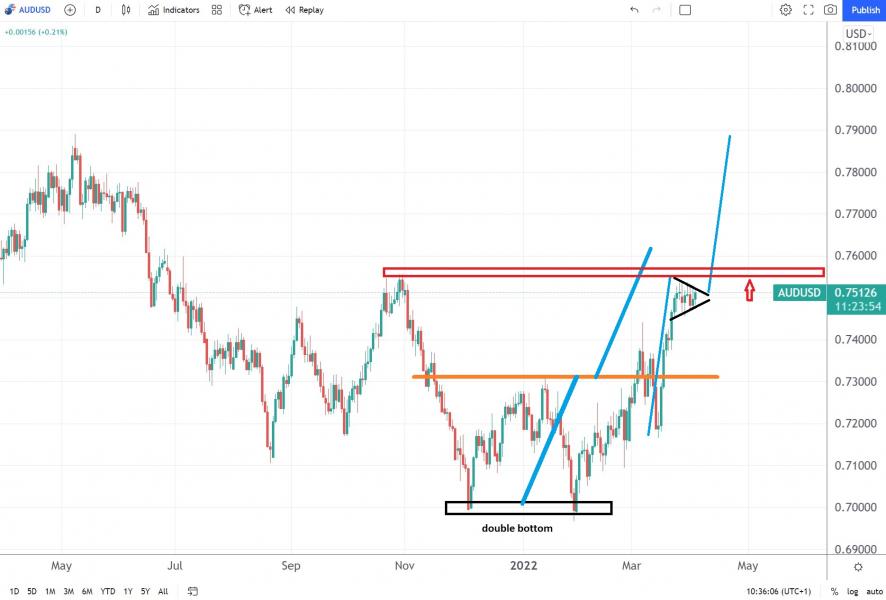
AUD/USD: Head and shoulders pattern ends
The main Australian pair on the dashboard is the AUD/USD. It started this year on a high note, reaching 0.80 before declining.
It is now trading near 0.72, nearly a thousand pips lower, but traders can't say they weren't warned. The daily time frame showed a head and shoulders pattern for a few months before the bearish breakout began.
In other words, traders had all the time in the world to position themselves correctly. Many would say that it was the strength of the US dollar rather than the weakness of the AUD. However, the EUR/AUD cross tells us otherwise - it has risen by a thousand points over the past few months, proving that Aussie dollar weakness dominates. 
"Anything worth having is worth going for - all the way." - J.R. Ewing
Offline
Pages: 1
- Index
- » Analyses / Forecasts (by major banks and brokers)
- » AUD/USD: the AUD declining despite positive job numbers