You are not logged in.
Pages: 1
- Index
- » Market and broker regulation
- » The UK dominates the CFD market. Number of traders up 90%!
#1 06-04-2022 11:27:03
- johnedward
- Admin & Trader

- From: Paris - France
- Registered: 21-12-2009
- Posts: 3863
- Website
The UK dominates the CFD market. Number of traders up 90%!
The UK dominates the CFD market.
The number of traders has increased by over 90%!
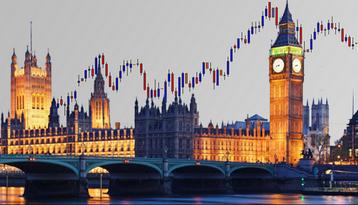
The City of London is not only the heart of European finance but also of global finance. On the map of the forex market, London is one of the most important hubs, which processes transactions worth several trillions of GBP every day. In addition to the flourishing professional industry, retail trading is developing very actively, mainly on the basis of contracts for differences (CFDs).
The UK is the birthplace of spread-betting (a leveraged product similar to CFDs). Last year, around 280,000 people traded at least one of these instruments in the UK, putting the country at the forefront of the industry.
The UK is the 5th largest economy in the world
Britain is the world's fifth largest national economy in terms of nominal gross domestic product (GDP) and accounts for 3.4% of global GDP. The UK is also one of the world's top five exporters.
Fun historical fact: in the 18th century, Britain was the first country to begin the process of industrialization. Thanks to the expansive growth of its colonial empire, it represented 9% of the world's GDP at the time.
Just as the British economy is one of the largest in the world, the national currency, the pound sterling, is one of the most important reserve currencies. It is overtaken by the US dollar, the euro and the Japanese yen.
According to the Bank of England's latest triennial report on the foreign exchange market, daily foreign exchange trading volume in London stood at $2.39 trillion in April 2020. A similar report released in 2019 by the Bank for International Settlements (BIS) showed the UK as a whole to be the most important foreign exchange center in the world, significantly ahead of the US, Hong Kong and Singapore, among others.
FCA: One of the most important regulators of the forex and CFDs industry
Did you know that one of the first central banks was opened in the UK (the Bank of England)? Islanders have a very long tradition of financial market legislation and regulation. The Financial Conduct Authority (FCA), which is responsible for regulating the retail derivatives industry, among others, was created based on their tradition.
Although the FCA was only established in 2013, it builds on the long tradition of the FSA (Financial Services Authority). It is responsible for regulating around 49,000 financial firms operating in the UK. Among them, there are many brokers who represent the top of the forex/CFD sector in terms of sales volumes.
280,000 traders after the pandemic. The UK is the largest CFD market in Europe
The UK leveraged trading market has seen the strongest growth over the past year, reclaiming its place as the largest market surveyed by Investment Trends. According to Lorenzo Vignati, the firm's research director, in the 12 months to May 2021, 280,000 Brits placed one or more leveraged trades (a 91% increase from pre-pandemic levels).
The average UK trader is 45 years old, but newer markets are attracting younger investors. Therefore, the average is closer to mid-30s.
“Overall, we find that UK and German traders tend to be the most inclined to trade a wide range of underlying instruments (3.5 on average). Even before oil prices peak level since 2012, 53% of UK traders were already exposed to commodities through their spread bets or CFD trades. The recent crisis and market instability could translate into key factors for strong participation", Vignati added.
$6,900 per month. This is the average amount deposited by CFD traders in the UK
Data published by cPattern shows that UK CFD traders credited an average of over $6,900 to their account each month last year (data available from January to November). During the same period, the average withdrawal was nearly half that amount, or $3,750.
Also, the first deposit (FTD) is high, with more than $1,000 for the reporting period. This situation is similar to another highly developed retail CFD market, Australia. Only novice traders in Singapore spend more. In their case, the FDT last year amounted to $1,650.
The distribution of data for individual months does not indicate clear seasonality in terms of average deposits and withdrawals.
"Anything worth having is worth going for - all the way." - J.R. Ewing
Offline
Pages: 1
- Index
- » Market and broker regulation
- » The UK dominates the CFD market. Number of traders up 90%!