You are not logged in.
#1 28-01-2026 14:18:30
- johnedward
- Admin & Trader

- From: Paris - France
- Registered: 21-12-2009
- Posts: 3870
- Website
Precious metals soar, fears grow over Fed independence
Precious metals soar, fears grow over Fed independence
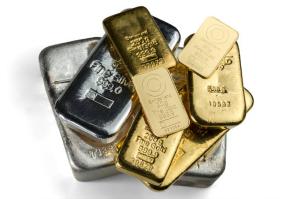
Precious metals surged to unprecedented levels after Federal Reserve Chair Jerome Powell revealed on Sunday that the central bank had been subpoenaed by the US Department of Justice to appear before a grand jury.
Gold prices briefly pushed past $5,261 per ounce, while silver jumped above $114, with both metals setting new all-time highs. The move reflected a sharp increase in investor anxiety over the Federal Reserve's political independence and the potential consequences for US monetary policy.
Markets have been increasingly unsettled by President Donald Trump's sustained attacks on the Fed and on Powell personally. The president has repeatedly argued that interest rates should have been cut faster and more aggressively, and has openly questioned whether the central bank should continue to operate free from White House influence.
After an aggressive tightening cycle in 2022 and 2023, during which rates were raised by a cumulative 525 basis points to rein in inflation, the Fed has shifted course. It cut rates by 100 basis points in 2024 and a further 75 basis points in 2025. Even so, policymakers remain caught between stubbornly high inflation and a weakening labour market, a balancing act made harder by higher import costs linked to tariffs introduced by the Trump administration.
Political pressure on the Fed has intensified. Trump has publicly floated the idea of dismissing Powell and has already attempted to remove Fed Governor Lisa Cook, citing alleged mortgage irregularities dating from before her appointment. Courts have temporarily blocked Cook's removal, and the Supreme Court is expected to decide whether a president can fire a Fed governor "for cause" based on actions taken prior to taking office.
Taken together, these developments have heightened fears that political intervention could erode a cornerstone of the US economic system: the independence of the central bank. Economists broadly agree that countries with autonomous central banks tend to experience lower and more stable inflation, while history shows that political control over monetary policy often leads to instability and rising prices.
The Justice Department's investigation centres on Powell's testimony to Congress last June concerning a long-term renovation programme for the Federal Reserve's historic buildings. Powell has firmly denied any wrongdoing and rejected claims that he misled lawmakers or mishandled the project.
In a public statement, Powell said the investigation had no legitimate connection to his congressional testimony or to oversight of the renovation. He argued that the Fed had provided extensive disclosures and briefings to Congress, and described the accusations as a pretext. According to Powell, the investigation represents retaliation for policy decisions that did not align with presidential preferences rather than a genuine effort to uphold the law.
He warned that the episode raises a fundamental question about whether future interest rate decisions will continue to be guided by economic data and evidence, or whether they could be shaped by political pressure and intimidation. Powell also pointed to his long career serving under administrations from both parties and said he intended to continue fulfilling the roles to which the Senate had confirmed him.
The timing adds another layer of uncertainty. Powell's term as Fed chair expires in May 2026, although he can remain on the Board of Governors until 2028. Trump has already suggested possible successors, including National Economic Council director Kevin Hassett and former Fed governor Kevin Warsh.
Reaction among Republican lawmakers has been mixed but unusually vocal, underlining how sensitive the issue has become. House Financial Services Committee Chair French Hill criticised the investigation as a needless distraction that could undermine effective monetary policy, even while acknowledging policy disagreements with Powell. Senator Kevin Cramer said he did not believe Powell had committed a crime and expressed hope for a swift resolution.
Others were more blunt. Senator Lisa Murkowski described the investigation as coercive and warned that undermining the Fed's independence would threaten both market stability and the broader economy. Some Republicans urged caution, saying the Justice Department should be allowed to complete its work before conclusions are drawn.
The controversy may also complicate future Fed nominations. Senator Thom Tillis has said he will oppose any confirmation, including that of the next Fed chair, until the matter is resolved.
Against this backdrop, demand for precious metals has surged as investors seek protection from policy uncertainty. Gold and silver were already enjoying a banner year. In 2025, gold gained nearly 65%, silver soared by 148%, platinum rose 127% and palladium advanced 78%. With the exception of palladium, all reached record levels, making 2025 the strongest year for the sector since 1979.
Investment flows played a decisive role. Global gold exchange-traded funds recorded roughly $89 billion in inflows during the year, while silver ETFs attracted about $10 billion. Investors increasingly turned to metals as a hedge against rising government debt, geopolitical conflict, trade tensions, persistent inflation and, most recently, renewed doubts about the Federal Reserve's independence.
Silver also benefited from strong industrial demand, particularly from solar power, electric vehicles and artificial intelligence infrastructure, giving it an additional growth-driven tailwind alongside its traditional role as a safe-haven asset.
Claim your FREE stock here!
Account registration + verification + deposit = 1 free stock!

RISK WARNING
CFDs are complex instruments and come with a high risk of losing money rapidly due to leverage. 70% of retail investor accounts lose money when trading CFDs with this provider. You should consider whether you understand how CFDs work and whether you can afford to take the high risk of losing your money.
"Anything worth having is worth going for - all the way." - J.R. Ewing
Offline